
In the wholesale world, keeping clients engaged long-term is a big challenge. Transactional relationships often lack the depth needed for steady, ongoing business. Many companies struggle to move beyond just price negotiations and build real, strategic partnerships.
We found a powerful solution by blending loyalty initiatives with a strong customer relationship management system. This method goes beyond simple discounts. It creates a way to recognize and reward the true value of a wholesale partnership.
In this case study, we share our experience designing and implementing such a program. We talk about the specific hurdles we faced in the wholesale channel. We also share the tailored solutions we used with our CRM platform and the results we got. The outcome was a big improvement in long-term business alliances and a more stable revenue stream.
Key Takeaways
- Wholesale client retention requires moving beyond price to build value-driven partnerships.
- A dedicated B2B loyalty program is fundamentally different from a consumer-focused model.
- Your CRM system is the essential data engine for personalizing wholesale engagement.
- Integrating loyalty logic into your CRM platform turns relationship data into actionable growth strategies.
- A well-executed program directly strengthens business alliances and drives predictable revenue.
- Real-world implementation involves solving unique wholesale channel challenges.
- The fusion of strategy and technology transforms transactional relationships into strategic assets.
Understanding B2B Loyalty Programs
B2B loyalty programs are different from those for consumers. They focus on building strong partnerships for mutual growth. In the wholesale world, these programs do more than just offer rewards for transactions. They aim to help clients succeed in the long run by working together and understanding their needs.
It’s important to understand this. Good programs use data and strategy, not just good intentions. The right B2B loyalty program software is key to making this work.
What are B2B Loyalty Programs?
B2B loyalty programs reward wholesale clients for their business volume, how long they’ve been partners, or their strategic value. These programs are more complex than those for consumers, who often just buy and get rewards.
These programs recognize that client relationships are complex. Rewards can be based on things like on-time payments, growing business, co-marketing, or giving valuable feedback. The goal is to create a win-win situation where both sides help each other succeed.
Benefits of Implementing Loyalty Programs
Investing in a loyalty program can really pay off. Here are some key benefits:
- Increased Order Frequency: Loyal clients are more likely to buy from you first, leading to more orders and less competition.
- Higher Average Contract Value: Clients in tiered programs often spend more to reach higher rewards, increasing what they spend per order.
- Improved Client Lifetime Value (CLV): This is the biggest win. By keeping clients longer and more engaged, you make more money from them over time.
Tracking these metrics manually is hard. A dedicated platform makes it easy, giving you clear insights into how your program is doing.
Common Misconceptions about B2B Loyalty
There are myths that can stop you from starting a loyalty program. It’s important to clear these up to get everyone on board.
Misconception 1: “It’s just a fancy discount scheme.” This is a big mistake. A good program offers more than just discounts. It can include things like early access to new products, special support, or training. The goal is to add value, not just cut prices.
“We already give our best customers a discount. Why do we need a formal program?”
Misconception 2: “It’s too costly and complex to manage.” While a bad program can be a hassle, a well-designed one can be a game-changer. The initial cost is worth it for the big gains in keeping clients and making more money. The right B2B loyalty program software makes it easy to manage, turning a potential expense into a profit maker.
Clearing up these myths helps businesses see loyalty programs for what they really are: a way to grow and succeed in the long term.
The Role of CRM in B2B Loyalty Strategies
Your CRM is like a smart hub that makes your loyalty program work better. It connects customer data to personalized engagement. For wholesalers, it’s key to keeping clients loyal.
How CRM Enhances Customer Relationships
A CRM does more than just store contacts. It tracks every interaction, from calls to orders. This builds a detailed story for each client.
We use this story to offer unique rewards. Instead of the same discounts for everyone, we tailor rewards based on client behavior. This strengthens our relationship with clients.
Key Features of Effective B2B CRM Systems
Not all CRM systems are right for B2B wholesale. A good system for loyalty needs certain features.
- A 360-Degree Client View: This dashboard combines all client data into one place.
- Advanced Deal and Pipeline Tracking: It shows where clients are in their buying cycle, helping us offer timely rewards.
- Integrated Communication Logs: It logs every email and call, keeping our interactions personal.
These features turn the CRM into a tool for keeping clients loyal.
Integrating CRM with Loyalty Programs
When loyalty logic lives in your CRM, it becomes powerful. This integration requires both technical and strategic steps.
Technically, it means linking your B2B loyalty program software to the CRM. Strategically, it’s about setting rules. For example, upgrade a client’s tier when they hit a certain order volume.
We helped an industrial parts distributor do this. They integrated their CRM with loyalty rules. Now, sales reps can see loyalty status and rewards on client profiles. This makes wholesale client retention a natural part of sales talks.
Identifying Your Target Audience
Effective wholesale client retention starts with understanding our clients deeply. We need to know who they are, what they value, and how they work. This step helps us move from guessing to planning.
Segmenting Your Wholesale Client Base
It’s important to go beyond just looking at how much clients spend. We use a detailed model to see their true potential and fit with us.
Our main criteria for segmenting include:
- Growth Potential: We look at their order trends and plans for growth.
- Product Mix: We figure out which products are key to their business and where we can sell more.
- Strategic Alignment: We find partners who share our values, like sustainability or innovation.
This detailed approach lets us tailor our loyalty efforts. We focus differently on clients with high growth and those who are stable but niche.
Understanding Client Needs and Expectations
While data is important, talking directly to clients is even more valuable. We regularly interview and survey our clients.
We aim to find out what they really need and expect. We ask about their challenges, what their customers want, and what would make our partnership unbeatable.
This insight is priceless. It turns our loyalty program into a solution that really meets our clients’ needs.
Tools for Audience Analysis
Our CRM system is key to understanding our clients. It uses data to paint a clear picture of our audience.
We use:
- Advanced reporting dashboards to see how clients buy and engage.
- Interaction tracking to find out who responds best to us.
- Predictive scoring models to spot clients at risk or ready for more.
With these tools, we go from guessing to knowing. This data-driven approach makes our client retention proactive and personal. We don’t just know who our clients are; we know what they’ll need next.
Designing Effective Loyalty Program Structures
Creating a wholesale loyalty program is like building a custom solution for growing partnerships. First, you need to know your clients well. Then, design a program that keeps them coming back. A good structure offers clear benefits, fits with their operations, and is easy for your team to manage.
Types of Loyalty Program Models
There are key models for B2B loyalty programs. The right one depends on your sales cycle, product, and goals for client relationships.
The most common models include:
- Spend-Based Rewards: Clients earn points or rebates based on what they buy. This model is simple and easy to explain.
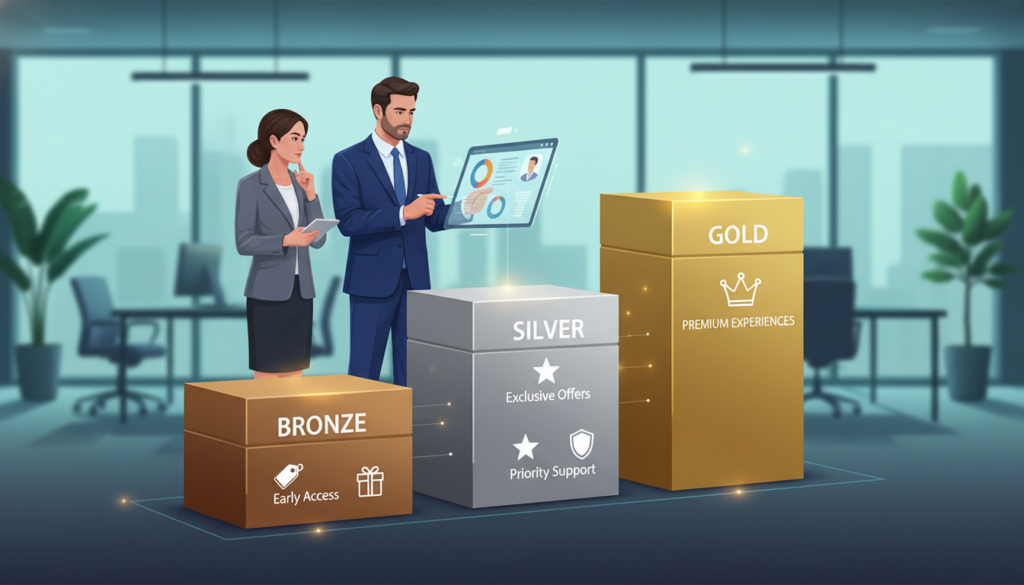
- Tiered Milestones: Clients move up levels (like Silver, Gold, Platinum) based on their spending. Each level offers better benefits.
- Partnership or Coalition Programs: You work with other vendors to offer rewards together. This makes your program more valuable.
Each model has its own benefits. Spend-based programs boost sales right away. Tiered systems encourage long-term goals and status. Partnership models help you stand out in a crowded market.
Points vs. Tier-Based Systems
Choosing between points and tier systems is key. Points systems are flexible, letting clients use points for various rewards. They’re good for encouraging specific purchases.
Tier systems, on the other hand, offer a sense of elite membership. Clients aim for higher status, which brings perks like special account managers and priority support. The desire for status can keep clients loyal.
We found a hybrid model works best. Clients earn points for all purchases and can redeem them. Their spending also puts them in a tier, giving them ongoing benefits. This mix offers immediate rewards and long-term value.
Customizing Offers for Clients
Generic rewards don’t work well in B2B. Different clients have different needs. A tiered pricing CRM is crucial for customization.
This CRM lets us set up unique discounts and offers for different clients. Instead of handling each deal manually, we use rules in the CRM. These rules depend on the client’s tier, spending history, and potential.
For example, the system can automatically give a discount at checkout for “Strategic” tier clients. It can also offer free training sessions when a “Partner” tier client meets a spending goal on a new product.
The table below shows how customization can vary by client segment:
| Client Segment | Primary Reward Focus | CRM Automation Example |
|---|---|---|
| High-Volume, Price-Sensitive | Direct rebates & bulk discounts | Auto-apply tiered pricing based on quarterly volume. |
| Growth-Focused Partners | Co-marketing funds & sales enablement | Trigger access to a co-op marketing portal upon tier promotion. |
| Strategic Enterprise Accounts | Dedicated support & product roadmap input | Automatically assign a dedicated success manager and schedule quarterly business reviews. |
Using tiered pricing CRM tools, we create a personalized yet efficient system. It’s tailored to each client but easy to manage at scale. This ensures your loyalty program is both effective and manageable.
Leveraging Data for Personalization
Raw data becomes actionable intelligence when funneled through a strategic CRM. This unlocks hyper-personalized loyalty experiences. We move from simple transaction tracking to anticipating client needs.
We build stronger relationships by showing we understand their unique business challenges. This makes our programs more than just transactions.
Effective customer marketing in the B2B space relies on this depth of insight. It transforms generic communication into relevant dialogue. Our goal is to make every interaction feel specifically designed for the recipient.
Collecting Customer Data through CRM
Our CRM acts as the central hub for all client intelligence. We systematically gather data points that paint a complete picture of each relationship. This goes far beyond basic contact information.
The most valuable data for loyalty logic includes:
- Purchase History: Order frequency, product preferences, and seasonal buying patterns.
- Support Interactions: Ticket history and resolution notes that reveal pain points.
- Content Engagement: Downloads of whitepapers, views of training videos, and webinar attendance.
This combined view allows us to score engagement and predict future needs. We see not just what clients buy, but how they interact with our entire ecosystem.
Utilizing Data for Targeted Campaigns
Collected data fuels highly specific campaigns. We recently identified a segment of manufacturing clients who regularly purchased a core component but had not accessed our new advanced troubleshooting portal.
Our campaign offered exclusive points for completing a portal tutorial. The creative assets used industry-specific terminology and highlighted time-saving benefits. Logistically, we triggered personalized emails directly from our CRM, based on the client’s purchase history.
The campaign achieved a 40% higher open rate than our broad newsletters. This is the power of data-driven customer marketing. It ensures our offers hit the mark by solving a known, specific need.
Analyzing Engagement Metrics
Launching a campaign is only the first step. We continuously measure its impact to refine our approach. Key metrics tell us what truly resonates with our wholesale partners.
Within our B2B loyalty program software, we track metrics like campaign open rates, reward redemption velocity, and feedback scores on offers. We analyze which reward types drive the most engagement from different segments.
This analysis creates a feedback loop. Poorly performing campaigns signal a need to adjust our messaging or reward structure. High engagement confirms our data segmentation is accurate. This cycle of test, measure, and optimize is central to our strategy.
Using robust B2B loyalty program software for this analysis provides clear dashboards and reports. It turns raw data into a roadmap for program improvement and deeper client relationships.
Creating Compelling Rewards and Incentives
After designing your loyalty program, it’s time to add incentives that clients really want. The rewards you offer are key to keeping clients engaged. They must provide clear, tangible value that strengthens your partnership.
Crafting these B2B rewards needs a deep understanding of what motivates your wholesale clients. It’s not just about the price.
Types of Rewards that Resonate
Effective incentives come in two main types: monetary and strategic value. Mixing both often works best.
- Monetary & Discount Incentives: This includes annual rebates, volume-based bonuses, and exclusive tiered pricing unlocked through loyalty tiers. These provide immediate, quantifiable value.
- Strategic & Service Perks: Non-monetary rewards can be even more powerful for fostering long-term ties. Examples are dedicated account management, priority support, and co-marketing opportunities that boost the client’s own business.
The most resonant reward is one that solves a specific pain point or opens a new opportunity for your client.
Balancing Cost and Client Satisfaction
Every reward has a cost, so smart financial modeling is essential. We view rewards not as an expense, but as an investment in retention and growth. The key is to align reward value with client lifetime value.
Technology is a powerful ally here. A sophisticated tiered pricing CRM automates the entire process. It can seamlessly apply exclusive pricing or rebate rules based on a client’s loyalty tier or purchase history. This automation ensures our reward delivery is scalable, accurate, and directly tied to performance, maximizing ROI for both parties.
Collaborations and Partnerships for Rewards
You don’t have to build every reward yourself. Strategic partnerships dramatically expand your reward catalog’s appeal without significant internal development cost.
We have successfully partnered with industry-specific software providers, business service firms, and event organizers. These collaborations allow us to offer rewards like complimentary software subscriptions, professional development courses, or premium event tickets. These exclusive offers, curated through partnerships, add a layer of prestige and variety to our B2 rewards program that we couldn’t provide alone.
Ultimately, a compelling reward strategy is a balanced ecosystem. It uses data to understand client desires, employs tools like a tiered pricing CRM for efficient delivery, and leverages external partnerships to enrich the offering. This multi-faceted approach ensures your incentives remain fresh, valuable, and directly contributive to lasting client loyalty.
Ensuring Seamless Customer Experience
A program can fail if it’s hard to use. We make loyalty a key part of doing business with us. This makes it a strong part of our relationship with customers.
We make every touchpoint count. We want benefits to feel earned and access easy. This makes the experience smooth.
Integrating Loyalty Programs with Sales Processes
We made our loyalty program part of our sales workflow. CRM automation shows a client’s status and rewards at every step.
- During Quoting: CRM applies discounts based on the client’s tier. Sales reps see this right away.
- At Order Placement: The system shows points and promotions. This makes every order special.
- Through Invoicing: Points earned are listed on the invoice. Messages about reaching the next tier are sent automatically.
This integration makes things easier. Clients don’t need to remember to apply benefits. The CRM is the source of truth, making loyalty part of their buying habit.
Training Employees for Consistent Messaging
Our people are key to a great experience. We trained our teams to be true ambassadors.
The training covered three main areas:
- Knowledge: Understanding the program’s mechanics and benefits.
- Context: Knowing how to match rewards with each client’s goals.
- Advocacy: Sharing earned benefits and future opportunities.
We gave our teams scripts but encouraged personal touches. This way, every client gets the same enthusiasm, whether it’s their account manager or support line.
Regular Feedback and Adjustments
A program needs to grow. We have feedback loops to keep improving.
Our main feedback tools are:
- Quarterly surveys after big interactions.
- A “Voice of the Client” channel for informal feedback.
- Analysis of program metrics and sales data.
We discuss feedback in monthly meetings. If we see a problem, we can try a fix quickly. This makes our loyalty program a living part of our strategy.
This cycle of feedback and improvement makes our experience seamless. It shows we’re committed to our clients’ success. By making loyalty a part of every interaction, we improve the whole customer journey.
Marketing Your Loyalty Program
A good loyalty program needs a strong marketing push to reach your wholesale clients. Moving into the launch phase is key. We aim to clearly share the program’s value through various channels.
This effort turns your investment into real engagement. It makes the program a key part of your customer marketing efforts.

Strategies for Promoting Your Program
We don’t take a one-size-fits-all approach to marketing. Instead, we craft a plan for each client group. The CRM guides our targeting.
For top clients, we use personal, hands-on outreach. For a wider group, we run digital campaigns that scale. We always highlight the special B2B rewards and business perks.
Here’s a look at the main channels we use:
| Marketing Channel | Primary Reach | Relative Cost | Best For |
|---|---|---|---|
| Targeted Email Sequences | High (Direct) | Low | Announcements, personalized offers |
| LinkedIn & Social Media | Broad & Professional | Medium | Brand authority, program awareness |
| Virtual Launch Events | High-Value Clients | Medium-High | Deep engagement, Q&A |
| Account Manager Outreach | Strategic Accounts | High (Time) | Relationship reinforcement |
Utilizing Social Media and Email Campaigns
Email is key for our direct customer marketing. We send out sequenced emails to show off the program’s features.
- Welcome Series: Explains the program structure and how to earn points.
- Educational Content: Shares case studies on how peers use their B2B rewards.
- Promotional Blasts: Announces limited-time bonus point opportunities.
On social media, especially LinkedIn, we focus on building our brand. We post about loyalty trends and client success stories.
This approach keeps the program in mind. It also drives traffic to a dedicated page for signing up.
Hosting Launch Events for Awareness
We create special launch events for our most valued partners. Recently, we hosted a virtual event for our top clients.
The event included a live tour of the portal and a Q&A with our leaders. It made clients feel important and heard.
“The launch event didn’t just explain the program; it made us partners in its success. Seeing the tangible B2B rewards upfront was a powerful motivator.”
We used the event to get quick feedback. This helped us make changes before the full launch. The excitement from the event became a key part of our referral strategy.
Marketing your loyalty program is an ongoing effort in customer marketing. It needs consistency and a willingness to adjust based on feedback. By promoting your B2B rewards well, you turn a static program into a dynamic tool for building relationships.
Measuring Success and ROI
Measuring the impact of a loyalty program is more than just looking at numbers. It’s about understanding how clients behave and how we can grow our business. We use real data to measure how well our program is doing. This helps us see if our investment is worth it and how we can get better.
By setting clear goals, our loyalty program becomes a valuable asset. We focus on metrics that show how our program helps us make money. This careful tracking is key to proving and improving our return on investment.
Key Performance Indicators (KPIs) to Track
We keep an eye on a few important KPIs to check how our program is doing. These metrics give us a full picture of how clients are participating and the financial benefits. Each KPI tells us something different.
Member Growth Rate shows how fast our client base is growing. Active Member Percentage tells us how many of our enrolled clients are active. A high sign-up rate is good, but activity is what really matters.
Redemption Rates are very important. They show how often clients use their rewards. If redemption is low, it might mean our rewards aren’t appealing enough.
The most important metrics are Retention Rate and Customer Lifetime Value (CLV). We compare these for program members and non-members. A good program will have higher retention and CLV for members.
| KPI | Definition | Why It Matters |
|---|---|---|
| Member Growth Rate | The percentage increase in program enrollments over a specific period. | Indicates program appeal and marketing effectiveness. |
| Active Member % | The proportion of enrolled clients who performed a qualifying action (e.g., purchase, login) in the last quarter. | Measures ongoing engagement, not just initial sign-ups. |
| Redemption Rate | The percentage of earned points or rewards that clients actually claim. | Direct indicator of reward attractiveness and program communication success. |
| Member Retention Rate | The percentage of program clients who continue doing business with us year-over-year. | Shows the program’s ultimate goal: fostering long-term loyalty. |
| Member CLV vs. Non-Member CLV | The average total revenue from a program member compared to a non-member over their relationship. | Quantifies the financial uplift directly attributable to the loyalty program. |
Tools for Measuring Loyalty Program Effectiveness
We use a mix of software to collect and analyze our data. Our CRM system is at the center. It gives us real-time insights into client interactions and program status.
Our CRM has advanced features for segmenting clients. This helps us send personalized messages. We also use analytics platforms for deeper insights.
Google Analytics tracks website engagement from loyalty members. Specialized loyalty platforms offer reports on points and redemption. The key is connecting these data sources. A strong tiered pricing CRM is especially useful. It helps us analyze buying patterns across different client segments and pricing levels.
Adjusting Strategies Based on Results
Data is only useful if it leads to action. We review our KPIs every quarter to spot trends and oddities. If active members drop, we check our communication and rewards. Low redemption rates mean we need to rethink our rewards.
This ongoing process turns insights into better performance. We’re not afraid to change course when the data suggests it.
Our biggest change came from analyzing our CRM data. We found a mid-tier client segment wasn’t buying much or redeeming rewards. Their preferences were different from what we thought.
This segment wanted flexible shipping more than discounts. We changed our rewards to include shipping benefits. In two quarters, their activity and spending went up a lot. This data-driven change saved a potentially struggling segment.
Success is a never-ending cycle: track, analyze, adjust, and track again. It keeps our loyalty program fresh, valuable, and in line with what our clients need.
Overcoming Common Challenges in B2B Loyalty
The journey to strong wholesale client retention faces many hurdles. We see these as normal steps in a program’s growth. Recognizing them early and having a plan is key to success.
Addressing Resistance from Clients
It’s common for wholesale partners to be skeptical at first. They might think the program is too complex, not relevant, or a hidden price hike. Our experience shows that being open and showing real value helps.
We tackle this by offering a detailed, hands-on onboarding. It’s not just an email. We have a dedicated session to show how the program benefits their business. We introduce the dashboard, explain the first reward, and answer questions right away.
This personal approach turns skeptics into supporters. It shows the program is a tool for their success, not just a sales trick.
Managing Program Costs
Keeping costs under control is essential. A program that’s too generous can drain resources, while one that’s too tight won’t engage. We manage costs by budgeting wisely and designing smart rewards.
We link every incentive cost to a clear ROI. We focus on rewards that are valuable but don’t cost much, like exclusive data or priority support. For tangible rewards, we use tiered systems where better benefits come with bigger partnerships.
We regularly check redemption rates and program use to adjust spending. This keeps our loyalty strategy profitable, not a financial drain.
Keeping Engagement High Over Time
This is the biggest challenge. Initial excitement can wear off, threatening to lose clients. To keep engagement, we need to keep making an effort.
We plan “program refreshes” to keep things new. This could be introducing new rewards, special bonuses, or fresh partnerships. Our goal is to keep clients excited and engaged.
We also use surprise-and-delight tactics to keep clients excited. An unexpected upgrade, a personalized report, or an exclusive webinar can spark enthusiasm. These gestures show clients they’re valued beyond just a sale.
We fight fatigue by making engagement easy and rewarding. We integrate the program seamlessly with their buying process and keep them updated on their status and rewards.
By tackling skepticism, cost, and fatigue, we build a strong loyalty program. Anticipating these challenges and having solid strategies helps deepen trust. This proactive approach is what drives lasting, profitable client retention.
Future Trends in B2B Loyalty Programs
The world of keeping clients is always changing. To stay ahead, we must look at what’s coming. We aim to create loyalty programs that work today and tomorrow.
The Growing Role of Technology and AI
Today, CRM tools like Salesforce and HubSpot use AI. This tech looks at lots of data to guess what customers might want next. It makes loyalty interactions feel special and personal.
AI picks the best time to offer rewards. This makes every interaction feel valuable and unique.
Sustainability and Ethical Considerations
Businesses now want partners who share their values. There’s a big push for programs that care about the planet and people. We’re adding green options to our loyalty programs.
This includes products made in a responsible way and shipping that doesn’t harm the environment. Clients like working with companies that match their values.
Innovations in Customer Engagement Strategies
We’re moving away from just points and levels. New tech like augmented reality could show off products in a cool way. Blockchain could make it clear how rewards are given out.
We want to create experiences that clients will remember. This will make our partnership stronger.
By following these trends, our loyalty strategy stays fresh. It shows we’re committed to our clients’ success in the long run.