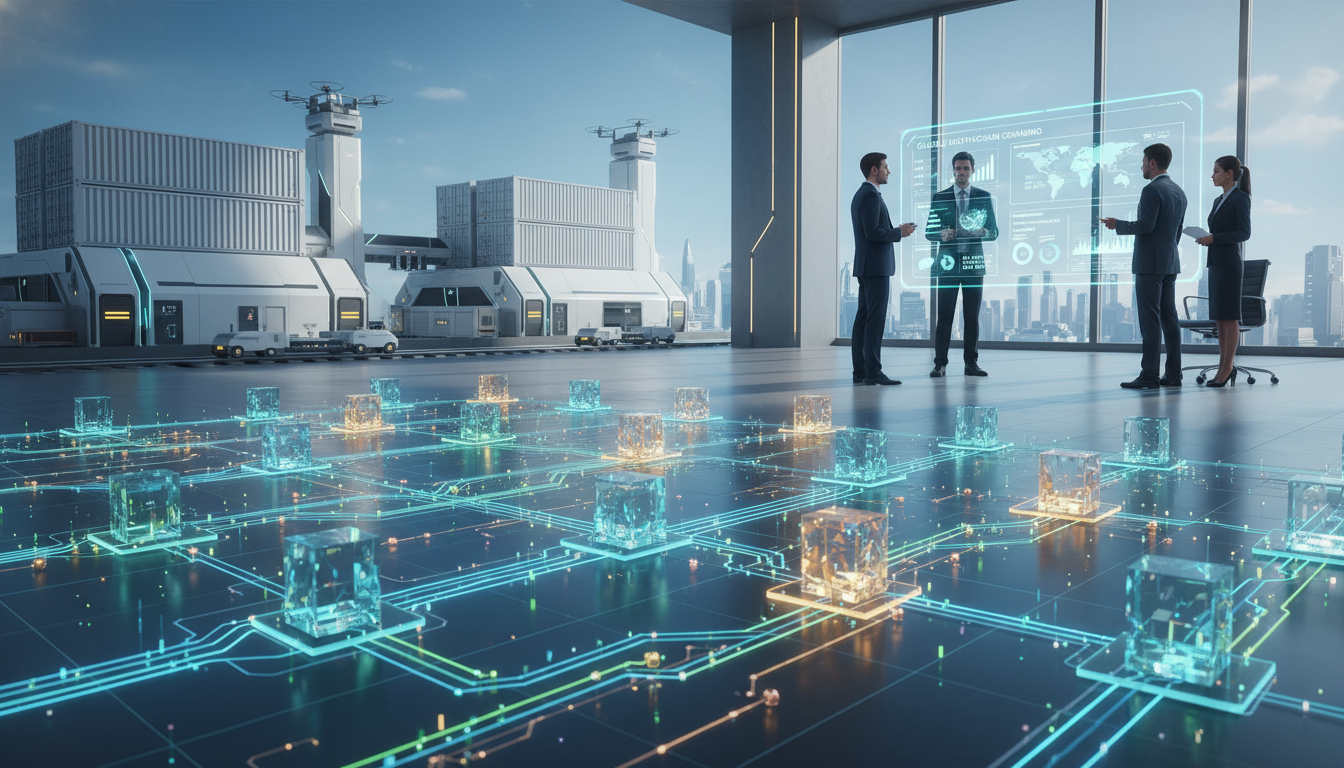
Today’s B2B logistics face big challenges. They lack clear visibility into shipments, payments, and stock levels. This leads to delays and hurts trust among partners.
A new solution is on the horizon. Enterprise Resource Planning (ERP) systems are teaming up with blockchain technology. Together, they create a single, reliable record for all transactions.
This partnership brings a fresh start. It aims for fully automated and traceable logistics. Every step, from start to finish, is recorded safely and forever. This builds trust and clarity in operations.
We’ll dive into how this tech combo works. We’re looking at the real benefits it offers to businesses wanting to stay ahead.
Key Takeaways
- Traditional B2B supply chains struggle with visibility and trust issues.
- Blockchain and ERP together create a single, unchangeable record for all transactions.
- This combo brings new levels of transparency and auditability to logistics.
- Smart contracts can automate processes, cutting down on errors.
- The outcome is a more efficient, secure, and trustworthy supply chain.
- This tech shift is shaping the future of managing complex logistics.
Understanding Blockchain Technology in Supply Chains
Blockchain has grown beyond just cryptocurrency. It’s now a key tool for building trust in supply chains. For B2B leaders, understanding it is crucial for unlocking new levels of transparency and efficiency. It offers a way to record, share, and sync transactions across a network of partners.
What is Blockchain?
Blockchain is a type of distributed ledger technology (DLT). Imagine a digital ledger or database shared by all in a business network. Unlike a single company’s database, this ledger is on many computers at once.
Each transaction is a “block” of data. These blocks are linked in a chain using cryptography. Once a block is added, it’s hard to change, making the history permanent and tamper-evident.
This structure helps supply chains, where goods pass through many hands. Everyone, from suppliers to retailers, sees the same verified information. This reduces delays and errors from different databases.
Key Features of Blockchain
Blockchain’s power in supply chains comes from four key features. These features solve the “trust problem” in logistics.
Decentralization: There’s no central server or authority. The ledger is kept by a network of computers. This reduces the risk of manipulation and builds a system based on collective oversight.
Immutability: Transactions can’t be erased or altered once they’re added. Any change would require altering all subsequent blocks and controlling most of the network, which is impossible. This creates a permanent and auditable history.
Transparency: Depending on the network, participants can see transactions. Everyone sees the same information at the same time. This reduces disputes and misunderstandings about order status and compliance.
Consensus Mechanisms: Before data is written to the ledger, nodes must agree it’s valid. This agreement is reached through rules like Proof of Work or Proof of Stake. This ensures only verified entries become part of the official record.
These features create a secure and transparent foundation for B2B interactions. They allow us to track a product’s journey with confidence, knowing every entry is accurate and verified by the network.
The Role of ERP in Modern Supply Chains
To understand the future of supply chains, we must first grasp the pivotal role played by contemporary ERP solutions. These systems form the operational core of most enterprises today. They integrate data and processes across various departments into a single, unified system.
This integration is crucial for managing modern, complex supply networks. Without a central system, coordination between finance, warehousing, and logistics breaks down. An ERP acts as the command center, providing the visibility needed to make swift, informed decisions.
Definition of ERP
Enterprise Resource Planning, or ERP, is often called the central nervous system of a business. It is a software platform that consolidates information from all core operational areas. This includes finance, human resources, inventory management, procurement, and logistics.
The primary goal of an ERP system is to create a single source of truth for enterprise data. It eliminates data silos that cause delays and errors. When sales logs an order, inventory is updated in real-time, and finance can see the projected revenue.
In a supply chain context, this means managers have a real-time view of stock levels, shipment statuses, and supplier performance. Traditional ERP systems excel at managing data within the corporate firewall. Their limitation begins when data needs to be shared and verified with external partners.
Benefits of Integrating ERP with Blockchain
The real transformation begins when we merge ERP with blockchain technology. This integration creates a powerful blockchain supply chain ERP ecosystem. It extends the trusted data environment of an ERP beyond one company’s walls.
We see several key advantages emerge from this fusion. First, it extends data integrity across the entire supply network. Every transaction or movement of goods recorded on the blockchain is immutable and time-stamped. This verified data can then feed directly into the ERP system.
Second, it automates tedious inter-company reconciliations. Disputes over invoices or delivery receipts become rare. Both parties work from the same authenticated record on the blockchain ledger.
Finally, it creates a seamless flow of verified information. Smart contracts can trigger actions in the ERP, like generating a purchase order when inventory falls below a certain level. This automation boosts efficiency and reduces manual oversight.
The table below highlights the fundamental shifts this integration enables:
| Feature | Traditional ERP System | Blockchain-Integrated ERP |
|---|---|---|
| Data Scope | Internal company data only | End-to-end supply chain data |
| Reconciliation | Manual, prone to errors and disputes | Automated via shared, immutable ledger |
| Trust Level | Based on internal audits and contracts | Built-in via cryptographic verification |
| Process Automation | Limited to internal workflows | Extends to partners via smart contracts |
| Transparency | Visibility stops at company borders | Granular, permissioned visibility for all authorized partners |
This synergy turns the ERP from a system of record into a system of collaborative intelligence. It no longer just reports what happened inside your company. It provides a live, verified picture of the entire blockchain supply chain ERP network.
Adopting this combined approach future-proofs your operations. It prepares your business for a more transparent, efficient, and trustworthy global marketplace.
Enhancing Transparency with Blockchain
Many B2B companies want to see everything in their supply chain. They use blockchain to make logistics transparent. This moves data out of hidden places.
This change makes a single truth for everyone involved. Now, every action and transaction is clear and can be checked.
How Blockchain Increases Visibility
Blockchain makes things clear by using a shared, unchangeable record. Everyone with permission can see the same data at the same time.
They can see where materials come from, where shipments are, and if they’ve cleared customs. It’s set up to share just the right amount of info, keeping secrets safe.
The main features that make this possible are:
- Immutable Records: Data can’t be changed or deleted once it’s logged, making it easy to check.
- Real-Time Updates: Everyone sees changes and movements right away, so there’s no delay in info.
- Permissioned Access: People only see what they need to, keeping things private while still being open.
Real-World Examples of Transparency
Big projects show how blockchain makes supply chains clear. They turn transparency into something real.
IBM Food Trust is a big name in food. It tracks food from farms to tables for things like greens and seafood.
By scanning a code, you can see where food comes from, how it was processed, and when it shipped. This makes it fast to find where problems come from, making food safer.
In shipping, Maersk’s TradeLens is a game-changer. It links carriers, ports, customs, and shippers on one blockchain.
Everyone can see the status of documents and containers live. This cuts down on arguments over delays and makes shipping smoother.
These examples show blockchain’s real benefits. It builds trust by making things clear and shared.
Improving Traceability in Supply Chains
Traceability is now a must-have in supply chains. It lets us track a product’s journey from start to finish. This digital trail is key for managing risks, keeping brands strong, and improving operations.
The Importance of Traceability
Traceability is a top priority for good reasons. Today’s businesses face huge pressure to show where their products come from.
Regulatory compliance is a big reason. For example, the FDA’s Drug Supply Chain Security Act requires tracking each drug unit. Food safety laws also demand quick identification of sources during outbreaks.
Sustainability and ethical sourcing claims need proof too. Consumers and investors want to see data on environmental impact, fair labor, and responsible materials. Without solid records, these claims are just empty promises.
Lastly, operational efficiency in recalls relies on it. Fast tracking of affected items saves money, keeps people safe, and keeps trust. Manual systems can’t handle this.
“In today’s market, traceability is the bridge between a claim and credibility. You cannot manage what you cannot trace.”
Blockchain Solutions for Traceability
Blockchain supply chain tech offers a game-changing solution. It creates a shared, unchangeable record that’s open to those who need to see it.
The method is simple yet powerful. Each item gets a unique digital ID on the blockchain. This ID travels with the item through the supply chain.
Every important event is logged as a permanent record:
- Production date and location
- Quality inspection results
- Shipping and customs clearance
- Temperature or humidity changes
- Transfer of custody between partners
This creates a secure, verifiable history. Anyone with permission can check the ledger for a product’s full history. It’s not just a log; it’s proof of the process.
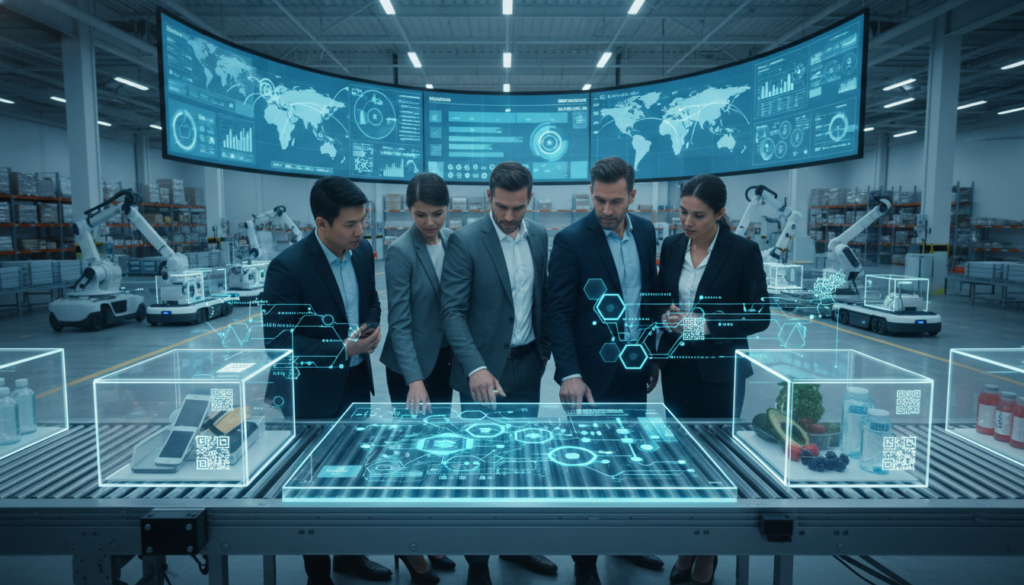
In B2B settings, enterprise blockchain is the best choice. These networks are for trusted partners only. They keep data private while sharing the truth about products.
This leads to better compliance reports, true sustainability claims, and quick recalls. Investing in these systems makes supply chains stronger, more reliable, and efficient.
Reducing Fraud and Counterfeiting
Financial scams and fake products are big problems in global supply chains. They cost businesses billions and hurt their reputations. An enterprise blockchain helps by making transactions secure and checking products from start to finish.
Fraud can take many forms, like fake invoices or payments for non-existent goods. Counterfeiting brings in bad products. But, blockchain technology offers a solution.
Blockchain’s Role in Securing Transactions
Blockchain works by using cryptography and a network consensus. Every transaction gets a unique digital fingerprint. This fingerprint is then recorded on a block.
Changing any detail in a transaction is nearly impossible. To alter a record, a hacker would need to change every block across the network at once. This makes the record-keeping permanent and unchangeable.
Key features of a blockchain supply chain include:
- Immutable Ledger: Data can’t be erased or changed after it’s agreed upon, stopping tampering.
- Transparent Permissions: Only authorized partners can see certain data, balancing openness with privacy.
- Provenance Tracking: Every change is logged, creating a complete history.
Blockchain’s power in fraud prevention isn’t just in keeping records. It makes creating false records hard and instantly detectable by the network.
Case Studies on Fraud Prevention
Real-world examples show blockchain’s impact. In the pharmaceutical world, fake drugs are a big risk. Companies like MediLedger use blockchain to track medicines. Each bottle gets a serial number logged on the ledger at the factory.
Every scan by a distributor, pharmacy, or hospital checks the medicine’s legitimacy. This instantly flags any fakes.
Luxury goods also face authenticity issues. Brands like LVMH have created the AURA platform. Consumers can scan a product’s unique digital certificate to check its authenticity.
This protects the brand’s value and gives customers peace of mind.
Smart contracts can also automate compliance. Imagine a shipment of organic cotton. Its certificate, temperature logs, and delivery confirmation are all hashed onto the blockchain. A smart contract is programmed to release payment only when the ledger confirms all conditions are met.
If the data shows a temperature issue, the contract stops payment. This prevents fraud for non-compliant goods.
These examples show that a blockchain supply chain is a real solution today. It turns every participant into a verifier, creating a strong defense system.
Boosting Efficiency Through Automation
Blockchain technology brings more than just security and transparency. It also brings automation to the supply chain. This means we can act on data automatically, leading to big savings and speed boosts.
At the heart of this automation is the smart contract. It turns static data into dynamic, self-running workflows.
Smart Contracts and Their Benefits
A smart contract is a self-running agreement. Its rules are written in code on a blockchain. When certain conditions are met, it automatically does what it’s programmed to do.
This cuts out the need for middlemen, manual checks, and paper. For B2B operations, the benefits are huge:
- Automated Letters of Credit: Payment guarantees kick in right away when shipment is verified, cutting days off the process.
- Instant Purchase Order Approvals: Orders get auto-approved within budget, speeding up buying.
- Milestone Payments: Money is released automatically when delivery scans or quality checks are logged, improving cash flow.
These smart contracts B2B applications make slow tasks automatic. Humans focus on handling exceptions.
| B2B Supply Chain Process | Traditional Method | With Blockchain & Smart Contracts |
|---|---|---|
| Purchase Order Approval | Email chains, manual sign-offs; takes hours or days. | Auto-approved against pre-set rules; occurs in seconds. |
| Invoice Reconciliation & Payment | Matching paper invoices to POs; 30-60 day payment terms. | Automatic matching and payment upon delivery confirmation; terms can reduce to days. |
| Customs and Compliance Documentation | Manual form filling by brokers; prone to errors and delays. | Data auto-populated from the immutable ledger; forms submitted instantly and correctly. |
Streamlining Processes with Blockchain
Imagine a blockchain supply chain that’s fully streamlined. A smart contract manages a shipment from start to finish. IoT sensors on the container track location and temperature.
When the goods reach the warehouse, the sensor data is verified and added to the blockchain. This meets a condition in the smart contract.
Without any human intervention, a payment is made to the supplier. The whole process, from receiving goods to payment, takes just minutes.
This is what smart contracts B2B automation can do. It creates a self-driving layer for logistics and finance. Processes become proactive, not reactive.
Blockchain streamlines processes, making efficiency a constant. The benefits are clear: faster times, lower costs, and fewer mistakes. This automation is a key step for businesses aiming for a transparent and strong supply chain.
Building Trust Among Supply Chain Partners
Blockchain changes how businesses trust each other. In old supply chains, trust was shaky. It relied on contracts and personal promises, but could be broken easily.
Blockchain and ERP systems change this. They make trust based on facts, not just promises.
How Blockchain Fosters Trust
A shared ledger is like a truth keeper for all. It records every deal and update forever. No one can change it without everyone agreeing.
This means no more guessing. Buyers can check where products come from or how they were kept. The distributed ledger technology makes sure everyone sees the same thing at the same time.
This stops arguments and builds trust. Businesses trust the system more than people. This makes the whole chain work better.
Collaborative Approaches in B2B
Blockchain works best when everyone works together. Companies are teaming up to make standards. This helps everyone see the whole picture.
Groups like IBM Food Trust show how it works. Companies from start to finish agree on how to share data. They all benefit from a system that’s fair and open.
This way, businesses can focus on getting better together. They don’t have to worry as much about who knows what. The shared ledger helps everyone grow together.
The table below shows how trust has changed:
| Aspect | Traditional Trust Model | Blockchain-Enabled Trust Model |
|---|---|---|
| Basis of Trust | Personal relationships, brand reputation, and legal contracts. | Cryptographically verified data on an immutable, shared ledger. |
| Data Accessibility | Fragmented; each party holds its own records, leading to disputes. | Unified; all authorized partners see the same real-time data. |
| Dispute Resolution | Lengthy, often reliant on audits and manual reconciliation. | Streamlined, with an indisputable audit trail for instant verification. |
| Collaboration Incentive | Often transactional and zero-sum, focused on individual gain. | Cooperative and positive-sum, focused on network efficiency and transparent logistics. |
| Adaptability to Change | Slow, as changes require renegotiation of terms and verification. | Agile, as smart contracts can automate new rules across the network. |
Using blockchain is more than just updating tech. It’s a smart move to make supply chains better. The future is about networks that use distributed ledger technology to make things clear and valuable.
Compliance and Regulatory Challenges
Supply chains face many rules from different places. For companies working across borders, keeping up is hard. The cost of not following the rules can be very high.
We should see these challenges as things to manage, not just obstacles.
Understanding Compliance Requirements
The rules for supply chains are all over the place. One product can have to follow many rules, sometimes they don’t agree. Keeping track of these rules manually is very hard.
Some big areas of trouble include:
- Data Privacy (e.g., GDPR): Strict rules on how personal data of customers or employees is collected, stored, and transferred across borders.
- Financial Reporting (e.g., SEC regulations): Requirements for accurate, timely disclosure of financial transactions and supply chain risks.
- Trade and Customs: Detailed documentation on country of origin, material sourcing, and product classification for tariffs and duties.
- Product Safety and Sustainability: Mandates for proving ethical sourcing, environmental impact, and adherence to safety standards.
Doing this manually leads to problems. It creates isolated data and a high chance of mistakes. It makes proving you follow the rules very hard.
Navigating Regulations with Blockchain
Blockchain technology is very helpful here. It doesn’t change the rules, but it makes following them easier. The main benefit is the permanent, shared record made by distributed ledger technology.
Every action, transaction, or change is recorded and can’t be changed. This makes it easy to check if rules are followed. For those checking compliance, it’s much simpler than searching through papers.

This permanent record makes it easier to report on things like customs or sustainability. Authorities can check the data directly, which speeds things up and builds trust.
Smart contracts B2B are also useful. They are agreements that run on their own. For example, a smart contracts B2B payment for materials can only happen after a certificate of sustainable origin is added to the distributed ledger technology.
This makes it easier to check if materials are sourced right. But, it’s important to remember that smart contracts are still new in law. They are great for following rules, but their legal status is still being figured out.
In the end, blockchain makes following rules easier. It turns a big problem into a chance to do things better and more efficiently.
Future Trends in Blockchain and ERP
Blockchain and ERP are on the verge of a big change. We’re moving from testing to making these technologies a key part of business. This change will change how companies handle complex B2B deals and global supply chains.
Innovations on the Horizon
New tech is coming together at the blockchain and ERP meeting point. Artificial intelligence is a big deal here. AI can look at blockchain data to predict supply chain problems.
These systems will spot delays early and find new paths. They will learn and get better over time. This is a big step up from today’s tools.
Decentralized Autonomous Organizations (DAOs) are another big idea for supply chain management. DAOs let many parties vote on decisions with tokens. This could change how groups set standards and solve problems.
Digital twins linked to blockchain tokens are also new. These virtual copies of real things track and monitor in real-time. Each twin is tied to a unique blockchain token, keeping a permanent record of an item’s life.
Predictions for B2B Supply Chains
We think enterprise blockchain will go from small tests to big use in 3 to 5 years. Big companies will move from testing to using it for real. They need strong systems that can handle lots of transactions safely.
Smart contracts B2B will manage complex logistics on their own. They will change terms based on data from IoT sensors and market changes. This means supply deals that adjust themselves without people.
The blockchain world will get standards for working together. This will let different blockchain systems talk easily. Companies won’t get stuck with one vendor or struggle to connect systems.
We expect rules to change to make blockchain records official. Governments will set clear rules for smart contracts. This will help more industries, like drugs and space, use these technologies.
| Current State | Future Trend | Impact on B2B Operations | Timeline |
|---|---|---|---|
| Isolated pilot projects | Production-scale infrastructure | Enterprise-wide transformation | 3-5 years |
| Manual contract management | Autonomous smart contracts B2B | Reduced administrative overhead | 2-4 years |
| Limited interoperability | Standardized protocols | Seamless partner integration | 4-6 years |
| Siloed data systems | Integrated AI-blockchain analytics | Predictive supply chain insights | 3-5 years |
| Centralized governance | DAO-based consortiums | Democratic decision-making | 5-7 years |
As blockchain grows, so will the need for secure tech. Quantum-resistant cryptography will keep data safe as computers get faster. This will protect against new threats.
Supply chain finance will change a lot with blockchain. Smart contracts B2B will make payments automatically. This will help cash flow and cut costs for everyone.
We see more blockchain networks for specific industries coming. These will have special features for things like fresh goods, big manufacturing, or electronics. This will make more businesses use these systems.
Conclusion: The Path Forward
Using blockchain and ERP systems together is a clear path to change B2B supply chains. This mix brings real benefits in seeing and securing data.
Starting on the blockchain supply chain ERP path offers many real advantages. These benefits help build a stronger operation.
Recap of Key Benefits
Companies get full visibility of product movements. This means they can quickly handle any problems or recalls. Risks of fraud and fake products also decrease with secure records.
Smart contracts make payments and shipments smoother, improving efficiency. Trust grows among all parties involved.
These benefits lead to more reliable and transparent logistics. Now, it’s time to put these ideas into action.
Embracing Blockchain in Supply Chain Management
We suggest starting with a small pilot project. Pick an area like tracking products or checking invoices. Work with a trusted partner or group, like IBM Food Trust or TradeLens, to use their knowledge.
It’s important to smoothly connect the blockchain data with your ERP system. This makes data useful for making decisions.
Start looking into it now. Taking the first step leads to a more open, efficient, and trusted supply chain.