
Every sales team faces a slowdown at some point. Tasks start to feel the same every day. Our team’s energy was low, even with a good CRM system.
We needed something to spark our team’s competitive spirit. We wanted to make reaching goals feel rewarding again.
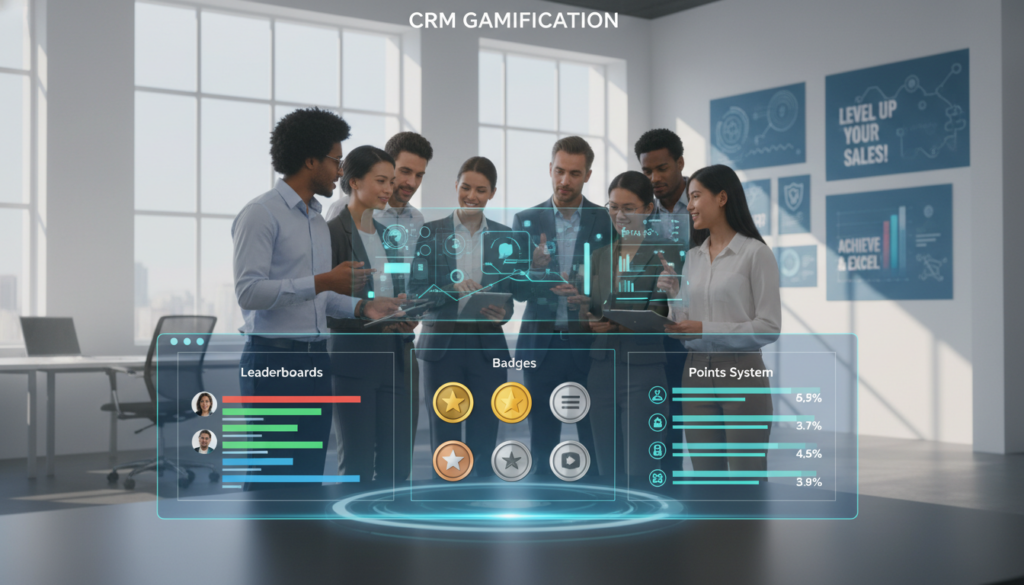
We decided to change how we used our CRM tools. We added game-like features to make it more engaging. This CRM gamification used points, badges, and leaderboards to celebrate wins.
Right away, we saw a big change. Our team became more competitive, and we stopped hitting plateaus. This story shows how we went from an idea to real success. We’ll guide you to achieve the same with your team.
Key Takeaways
- Gamification directly addresses common sales performance stagnation by boosting motivation.
- Core mechanics like points and badges make repetitive tasks feel rewarding and trackable.
- Leaderboards foster healthy competition and provide real-time performance visibility.
- Successful implementation requires aligning game elements with specific business objectives.
- The right sales leaderboard software integrates seamlessly with your existing CRM workflow.
- Measurable outcomes include increased activity, faster deal cycles, and improved team morale.
- Long-term success depends on refreshing challenges and recognizing ongoing achievements.
Understanding CRM Gamification and Its Importance
CRM gamification uses deep psychology to change how sales teams work. It turns boring tasks into exciting challenges. This makes your CRM system a powerful sales motivation tool.
This approach aligns human needs with business goals. It’s not just a feature, but a way to make sales better. It uses game design to make sales work more dynamic and effective.
What is CRM Gamification?
CRM gamification uses game mechanics and psychology in sales. It’s not about making work a game. Instead, it uses points and challenges to motivate.
This method taps into what drives us, like achievement and status. It makes tasks like updating records meaningful. Users get feedback and see how they’re doing, making them want to participate.
Benefits of Gamification in Sales
CRM gamification brings big benefits to sales teams. We’ve seen big improvements in several areas.
- Increased CRM Adoption: When the platform is fun, teams use it more. This means better data and a single source of truth.
- Higher Activity Levels: Challenges get reps to make more calls and emails. Activity metrics often go up a lot.
- Improved Data Hygiene: Rewards for good data entry keep the CRM reliable. Clean data helps with forecasting and insights.
- Enhanced Skill Development: Challenges and badges help reps learn and improve. This leads to better skills.
These benefits make sales teams more agile and data-driven. The CRM becomes a tool for engagement, not just a record-keeper.
How Gamification Enhances User Engagement
Engagement is key for any tool to succeed. Traditional CRMs often lack it because tasks are repetitive. CRM gamification adds surprise, competition, and rewards.
It makes progress clear. Leaderboards and badges show achievements. This fulfills our need for status and recognition.
It also creates a sense of community and competition. Seeing others succeed motivates everyone. This turns the CRM into a team effort, boosting productivity and job satisfaction.
Key Elements of Effective Gamification
Effective CRM gamification has three key parts: a good rewards system, clear progress signs, and social interaction. We designed each part carefully to work well together. This makes a strong engine for keeping performance and engagement up.
These parts are more than just features. They are the main sales motivation tools that make daily tasks exciting. Let’s look at how each part helps make a winning strategy.
Points, Badges, and Rewards Systems
Our points system values quality over just doing a lot. We gave points for important actions like closing big deals or keeping customers. This made reps focus on important tasks.
Badges were like trophies for achievements. We had a system that honored both skill and hard work. For example, a “First Close” badge was for new reps, and a “Quarterly MVP” badge was for top performers.
Rewards were a mix of things you can touch and things you can’t. You could get gift cards or extra time off. Or, you could get praise or chances for career growth. This mix met different needs in the team.
| Reward Type | Description | Example | Primary Impact |
|---|---|---|---|
| Tangible | Physical or money items with clear value. | Bonus, gift card, company swag. | Immediate extrinsic motivation. |
| Intangible | Non-material recognition and status. | Special badge, featured on team call, title change. | Long-term intrinsic motivation and pride. |
| Experiential | Unique events or opportunities. | Lunch with CEO, conference pass, training course. | Personal growth and memorable engagement. |
| Social Recognition | Public acknowledgment from peers and leaders. | Shout-out in company newsletter, “Wall of Fame”. | Strengthens team culture and belonging. |
Progress Tracking and Milestones
It’s crucial to track progress clearly to keep momentum. We made every rep’s progress visible in the CRM dashboard. This let them see how close they were to their goals.
Milestones were set at reachable points. They were like checkpoints on the way to bigger goals. Celebrating these wins kept everyone’s energy up during long sales cycles.
The benefits of good progress tracking are clear:
- It gives constant feedback and a sense of achievement.
- It helps managers spot reps who need help early.
- It turns big goals into smaller, doable steps.
- It reduces stress by making success clear.
What gets measured gets improved. Gamification makes measuring fun.
Social Interaction and Competition
Healthy competition, fueled by social interaction, was key for our leaderboards. We made features that encouraged sharing tips and celebrating wins. This built a supportive community, not just a place for rivalry.
Our CRM’s social feed let reps share updates when they earned badges or hit milestones. Peers could react and comment. This turned individual wins into team celebrations. It also provided a clear place for B2B sales contests.
To make social interaction positive, we followed these steps:
- We set clear rules that emphasized teamwork and respect.
- We designed team challenges alongside individual ones.
- We recognized teamwork, like sharing prospect insights.
- We used data from social features to improve our contests.
This focus on social dynamics makes competition positive. It prevents burnout and isolation. When done right, these features become strong sales motivation tools for B2B sales contests and more.
How Leaderboards Motivate Sales Teams
A well-designed leaderboard is key for team motivation. It turns everyday tasks into a drive for excellence. To use it well, you need to know about human psychology, customize it, and celebrate wins.
The Psychology Behind Competition
Competition taps into our basic desires. It mixes personal drive with rewards like recognition. A leaderboard makes this competition clear and real.
It shows a clear ranking of achievements, which many find exciting. But, we learned to make this positive. A bad system can make others feel left out.
We focused on many metrics, not just sales. We celebrated calls, deals, and new skills. This kept more people involved and recognized their unique contributions.
Customizing Leaderboards for Different Teams
Our first try with one leaderboard didn’t work. It made new hires feel bad and ignored specialists. We learned that motivation varies by team.
Good sales leaderboard software lets you segment teams. We made custom views for different roles and levels.
New reps were rewarded for calls and meetings. Senior account executives were judged on revenue and deal size. This made tracking fair and relevant.
We also had leaderboards for specific products or projects. This let specialists stand out. Advanced rep performance tracking made sure everyone had a chance to shine.
Celebrating Achievements with Public Recognition
Public recognition fuels the leaderboard. Seeing your name at the top is great, but being celebrated by others is even better. We made recognition a weekly event.
In team meetings, we highlighted top performers and those who improved the most. We shared their wins and how they did it. This was more than just praise; it was learning.
“Seeing my manager call out my persistence in front of the team validated weeks of hard work. It wasn’t just about the sale; it was about the effort being seen.”
This made our leaderboard a core part of our sales culture. It showed what we valued and encouraged good behavior. Rep performance tracking gave us the data to make every celebration real and well-deserved.
Implementing Gamification in Your CRM
Starting a CRM gamification program needs three key things: the right tech, smooth setup, and team training. We create a step-by-step plan to make it happen. Our goal is to build a system that motivates and shows real results.
Choosing the Right CRM Platform
Your CRM is the base. Not all platforms can handle advanced gamification. We looked for specific features to make our program work.
Key features include strong reporting APIs, customizable fields, and instant notifications. Having sales leaderboard software built-in is a big plus. It saves time and keeps things stable.
We also wanted platforms that work on mobile. This lets our team track and compete from anywhere. A good user experience is crucial. A bad interface can kill the game before it starts.
| CRM Feature | Importance for Gamification | Our Priority Level |
|---|---|---|
| Real-time Data Syncing | Ensures leaderboards are always current and accurate. | Critical |
| Customizable Dashboards | Allows display of points, badges, and rankings. | High |
| API & Integration Ease | Connects to dedicated gamification or sales leaderboard software. | High |
| Automated Rule Triggers | Automatically awards points for completed actions. | Medium |
Steps to Integrate Gamification Features
Integration is a step-by-step process. Rushing it can cause confusion and low adoption. We followed a clear, four-step plan.
Phase 1: Define Rules and Metrics. We matched game mechanics with business goals. Points were given for closing deals and logging calls. We avoided rewards that could harm the business.
Phase 2: Technical Configuration. This step set up the scoring logic in our CRM or linked software. We tested every rule carefully. A broken point system can lose trust fast.
Phase 3: Pilot Launch. We started with a small, eager team. Their feedback helped us improve challenges and rewards before the big launch.
Phase 4: Organization-Wide Rollout. After making improvements, we introduced the CRM gamification program to the whole sales team. It was important to explain why and how clearly at this stage.
Training Your Team for Success
The best tech fails without user support. Our training focused on change management and practical skills.
We started by explaining the benefits for each rep, not just the company. Gamification makes tasks more fun and recognizes achievements. We tackled concerns about more monitoring directly.
Hands-on workshops showed how to view stats, claim rewards, and use leaderboards. We chose “gamification champions” to encourage and support team members.
Keeping training going is key. We have short sessions after big updates to keep everyone up-to-date and engaged.
Measuring the Impact of CRM Gamification
Starting a gamification program is just the beginning. The real success comes from measuring its impact on sales. We followed a simple rule: what gets measured gets managed. To prove its worth, we built a detailed system to track and analyze data.
This system helped us see the real value of gamification. It also guided us to keep making it better.
Key Performance Indicators to Monitor
While revenue is important, it’s not the only thing to watch. We focused on metrics that show how engaged and efficient our reps are. Our rep performance tracking dashboard showed us several key KPIs.
First, we looked at lead response time. Quick follow-ups earned rewards, making this metric better. Second, we checked pipeline velocity, how fast deals moved. Contests helped speed up this process.
Third, we watched CRM log-in frequency. This showed if reps were using the platform daily. We also looked at the quality of their work, like call logs and notes.
The table below shows the KPIs we focused on and how they relate to gamification:
| Key Performance Indicator | What It Measures | Related Gamification Element |
|---|---|---|
| Lead Response Time | Speed of initial contact after lead assignment | Badges for “First Responder” |
| Pipeline Velocity | Average time for a deal to close | Points for stage advancement in B2B sales contests |
| CRM Log-in Frequency | User adoption and daily engagement | Daily login streaks and rewards |
| Data Completeness | Accuracy and depth of customer information entered | Points for detailed notes and updated fields |
Analyzing Gamification ROI
Figuring out the return on investment was key. We looked at both the costs and the benefits. Costs included software, time, and management. Benefits were more complex.
We saw productivity gains from faster sales and more rep activity. Lower employee turnover, thanks to gamification, saved us money. Better CRM data also helped marketing and customer service.
“The true ROI of gamification isn’t just in the software cost; it’s in the behavioral change it buys. We saw a 22% increase in pipeline velocity, which directly translated to more closed deals per quarter.”
Our analysis showed the real value of gamification. This helped us keep executive support and funding.
Making Data-Driven Decisions
The data from our KPIs and ROI analysis didn’t just sit in reports. It drove our continuous improvement. For example, if rep performance tracking showed a plateau in lead response times, we introduced a new challenge.
We found that not all B2B sales contests worked the same. By looking at data, we could improve our contests. This approach helped us tailor rewards for different teams.
In the end, our gamification became a dynamic tool for sales growth. Every change was based on solid data, keeping our efforts focused on business goals.
Challenges and Solutions in Gamifying Sales
CRM gamification offers great benefits, but it comes with its own set of challenges. A poorly designed system can actually demotivate your team. We will discuss the common obstacles and provide solutions to make sure your sales motivation tools work for everyone, not against them.
Common Pitfalls to Avoid
Starting a gamified system without careful planning can lead to mistakes. One common error is creating a system that encourages unhealthy competition. Leaderboards that only reward individual achievements can discourage teamwork.
Another mistake is rewarding actions that are not good for the team. For example, focusing on call volume can lead to poor quality conversations. Team members might focus on getting points rather than building strong customer relationships.
- Balance Individual and Team Metrics: Mix solo achievements with team goals to encourage teamwork.
- Quality Over Quantity: Reward meaningful outcomes, like customer satisfaction, not just activity.
- Regular Rule Reviews: Check your game mechanics often to prevent bad habits.
Addressing Resistance from Team Members
Some team members might be skeptical at first, especially if they are experienced. They might see CRM gamification as childish or a way to micromanage.
To overcome this, we involve skeptical team members in the design process. We ask for their input on what truly shows sales excellence. This makes them feel included and helps align the game with their professional values.
We also start with a small pilot program. This lets experienced team members see the benefits without feeling forced. Offering rewards for professional development, like training or conference passes, also helps them see the value.
Ensuring Inclusivity in Gamification Efforts
A good system motivates the whole team, not just the competitive ones. Focusing too much on leaderboards can leave others feeling left out.
Inclusive CRM gamification offers many ways to be recognized. We have badge systems for skill development and team challenges where everyone wins together. This way, everyone feels valued and can see a way to earn recognition.
This approach ensures that your sales motivation tools meet the needs of different team members. The goal is to uplift the whole team, where everyone’s contributions are recognized and valued.
Real-Life Success Stories of CRM Gamification
We look at real-life examples from tech and retail to see how gamification works. These stories show how using game mechanics in a CRM can really help sales and team spirit.
Case Study: A Tech Company’s Transformation
A mid-sized SaaS company had a big problem: their customer renewal rates were stuck. Their team was good but needed a better way to keep in touch with customers.
They added a gamification layer to their CRM. It gave points for things like making follow-up calls and checking in on customers. A leaderboard showed who was doing well each week.
The results were amazing. In just six months, they got 25% more customers to renew. The gamified CRM helped managers see how their team was doing in real time. This made everyone more engaged and motivated.
Case Study: A Retail Chain Boosting Sales
A big retail chain had trouble getting sales up in stores. They also had trouble getting stores to compete with each other. Managers didn’t have good ways to get everyone excited and share ideas.
They started B2B sales contests in their CRM every quarter. Each store was a team. The CRM tracked important sales numbers and showed who was leading on a big screen in each store.
This friendly competition really got stores excited. Stores in the contest saw sales go up by 18% on average. The CRM helped everyone learn from the best stores.
Lessons Learned from Successful Implementations
Looking at these and other success stories, we see some key things. The most important lessons are simple but powerful.
- Align Games with Core Business Goals: The best programs tie rewards to important goals, like keeping customers or making more sales. Gamification should help focus efforts, not distract from them.
- Keep Mechanics Simple and Transparent: Too many rules confuse people and make them lose interest. Simple, clear rules and feedback keep everyone engaged.
- Data is Your Most Valuable Tool: Good rep performance tracking in the gamified system helps improve challenges and recognize top performers. It also helps find who needs extra help.
- Foster Collaboration Alongside Competition: While B2B sales contests push people to do their best, adding rewards for sharing knowledge or helping others builds a stronger team.
- Celebrate Wins Publicly and Often: Recognition is key. Celebrating successes, big or small, keeps everyone motivated and positive.
These stories show that CRM gamification is more than just a trend. It’s a real way to unlock potential and get real results for your business.
Future Trends in CRM Gamification
The next big thing in CRM gamification is all about personalization and prediction. We’re moving away from just points and badges. Instead, we’re heading towards systems that learn and adapt to each salesperson’s journey in real-time.
This change will make motivation more personal and performance gains more lasting.

These changes are real and are being shaped by new technologies. Let’s look at the main trends that will change how we engage and empower sales teams.
Innovations in Gamification Technology
Modern sales leaderboard software is becoming a dynamic ecosystem. One big change is the rise of real-time challenges. Instead of fixed goals, the system creates micro-challenges based on current activities or market changes.
Imagine a rep getting a prompt to contact five leads from a new industry. Completing it earns a special badge and points. This keeps the experience fresh and aligned with business goals.
We’re also seeing the start of immersive technologies. Augmented Reality (AR) dashboards can show a team’s performance data on a wall. Virtual Reality (VR) can simulate sales scenarios for training in a fun way. These tools make data more engaging and real.
“The future of sales motivation is about contextual and adaptive gamification. It’s not just about who’s on top. It’s about giving the right nudge at the right time for the right person.”
Predictions for Sales Team Engagement
How will these technologies change team dynamics? We think we’ll see a move from individual competition to more teamwork. Leaderboards might show teams that support each other well.
Engagement will become more holistic. Gamification systems will include well-being metrics. They’ll encourage breaks and celebrate positive feedback. The goal is to keep performance high without burnout.
The role of sales managers will change too. They’ll use gamification analytics to coach, not just manage. Their focus will be on interpreting data and fostering a healthy competitive culture.
Integrating AI and Machine Learning
AI will bring the biggest change. It will create personalized motivational paths. An AI can analyze a rep’s history, communication style, and schedule to suggest the best times for tasks.
Machine Learning algorithms will offer predictive coaching. The system might say, “You have a 75% chance of missing this month’s target. Here are three actions to get back on track.” It turns the CRM into a performance partner.
AI can also balance competition fairly. It can group reps by experience or territory potential. This makes CRM gamification inclusive and motivating for everyone, not just the top performers.
| Feature | Traditional Gamification | Future AI-Driven Gamification |
|---|---|---|
| Challenge Design | Static, one-size-fits-all monthly goals | Dynamic, real-time micro-challenges tailored to individual & business context |
| Performance Insight | Historical reports on past outcomes | Predictive analytics and personalized coaching recommendations |
| Leaderboard Function | Simple ranking based on raw sales numbers | Multi-dimensional rankings balancing activity, skill growth, collaboration, and territory difficulty |
| Reward System | Fixed rewards for fixed achievements | Adaptive reward schedules that maximize long-term motivation and engagement |
Adopting next-generation sales leaderboard software with these trends will set you apart. It transforms gamification into a strategic platform. The future is about building smarter systems that help every sales professional reach their best.
Best Practices for Maintaining Momentum
Momentum in sales gamification doesn’t happen by accident. It takes effort and ongoing work. A successful program is always evolving, not static. We see our gamification as a dynamic engine for driving performance.
We manage it to keep engagement high over time. This means preventing fatigue and keeping the team excited.
Our playbook focuses on three key areas. These practices keep our sales motivation tools effective and our team engaged.
Keeping Gamification Fresh and Engaging
Novelty drives human behavior. Predictable game mechanics lead to less participation. We introduce new themes and stories every quarter.
For example, we frame sales activities as chapters in a story. Seasonal sprints, like a summer “Revenue Rally,” add focused energy. This makes B2B sales contests memorable.
Visual updates are also important. Changing leaderboard graphics and designs signals evolution. This keeps the experience fresh.
Regularly Updating Challenges and Rewards
The metrics and rewards must change with business goals. Staying the same leads to disengagement. We review and refresh every six months.
Here are some strategies for updates:
- Rotating Core Metrics: Focus on new logos, upsell revenue, or proposal quality to develop skills.
- Tiered Reward Systems: Offer instant gratification and experiential rewards to meet different motivations.
- Surprise & Delight Elements: Add unannounced challenges or bonus points for specific actions to keep excitement.
This renewal keeps your gamification a true sales motivation tool, always aligned with current goals.
Encouraging Continuous Feedback
Make your sales team co-creators of the system. A top-down program often misses what motivates individuals. We establish a feedback loop, treating reps as key stakeholders.
We gather feedback through various channels:
- Short, post-campaign surveys
- Dedicated time in team meetings for gamification discussion
- An open suggestion channel within the CRM itself
Acting on feedback is crucial. When reps suggest new challenges or rewards, we seriously consider them. This makes the program a shared pursuit. It keeps B2B sales contests exciting for everyone.
By refreshing content, updating mechanics, and listening to your team, you create a lasting gamification program. The goal is a self-sustaining cycle of motivation, achievement, and innovation.
Conclusion: Unlocking Sales Potential with Gamification
We’ve seen how game mechanics can change sales culture. Good CRM gamification links daily tasks to big goals. It makes routine tasks exciting missions.
Recap of Key Takeaways
Success comes from clear elements. Points, badges, and rewards motivate people. Sales leaderboards spark healthy competition.
Tracking results with KPIs is crucial. Learning from others helps avoid mistakes.
Encouragement to Start Your Gamification Journey
Start exploring now. Check if your CRM can handle gamification. Start with a simple challenge or a pilot leaderboard.
Focus on actions that boost your key numbers. Small steps lead to big results and show value fast.
Final Thoughts on the Future of Sales Teams
The future is for teams that are quick and motivated. CRM gamification and tracking are key. They give the clarity and drive needed for top performance.
They create a culture where success is seen and celebrated.