
Today’s businesses depend on cloud systems for key operations and efficiency. But, picking one provider can lead to deep, lasting ties. This can limit future choices and raise costs unexpectedly.
This issue is more than a tech problem. It’s a core strategic concern for any company planning its digital future. The choices you make now affect your ability to adapt and grow in the long run.
We base our views on real-world experience and industry insights. We look at actual scenarios to see how companies can dodge common traps. It’s key to plan your system’s architecture with flexibility in mind from the start.
Building for flexibility is a business imperative. It lets your company adjust to new tech and market changes. This approach safeguards your investment and supports future innovation.
Key Takeaways
- Vendor lock-in restricts future choices and can significantly increase costs.
- Cloud ERP flexibility is a strategic business concern, not just an IT issue.
- Proactive architectural planning prevents costly dependency on a single provider.
- Real-world case studies provide valuable insights into impacts and solutions.
- A flexible system architecture is crucial for supporting long-term growth and innovation.
- Avoiding lock-in protects your technology investment and preserves options.
- Strategic planning enables your business to adapt quickly to market changes.
Understanding ERP Vendor Lock-In
Understanding vendor lock-in is key to a strong ERP system. It’s not just a contract issue; it’s a big risk for your business. We’ll explain what it is, how it happens, and its impact on your company.
Definition of Vendor Lock-In
Vendor lock-in in cloud ERP means being too tied to one provider. It’s not just a long contract. It’s when your data and processes are stuck with one company’s tech.
This makes leaving hard, because it costs too much in time, money, and effort. As one expert said,
“Lock-in isn’t about being stuck with a bad product; it’s about losing the freedom to choose a better one.”
Common Causes of Lock-In
Several things can lead to ERP vendor lock-in. Knowing these can help avoid it.
- Proprietary Data Formats: If your data is in a special format, moving it is very hard.
- Custom-Coded Integrations: Customizations and integrations make it hard to switch to another system.
- Restrictive Licensing Models: Contracts with penalties or limits can make it hard to change vendors.
- Specialized Training & Workflows: If your team only knows one system, changing is tough.
These factors make it hard to change your business operations.
Consequences of Vendor Lock-In
ERP vendor lock-in has big effects on your business. It affects your money and your future plans.
Inflated and Unpredictable Costs are a big problem. Without options, you pay more for renewals and custom work.
Another big issue is stifling of innovation. You can’t easily try new technologies or change vendors. Your progress is tied to your vendor’s plans, not your needs.
This also means you have less bargaining power. The vendor has more control because you can’t easily switch. Your business can’t quickly change or grow.
Finally, being tied to one vendor makes your business less flexible. It’s harder to adapt, grow, or improve. It’s important to see these risks early.
Importance of Flexibility in Cloud ERP
Flexibility in cloud ERP is key, not just a tech feature. It’s crucial for business growth. A flexible system turns your ERP into a dynamic engine for growth.
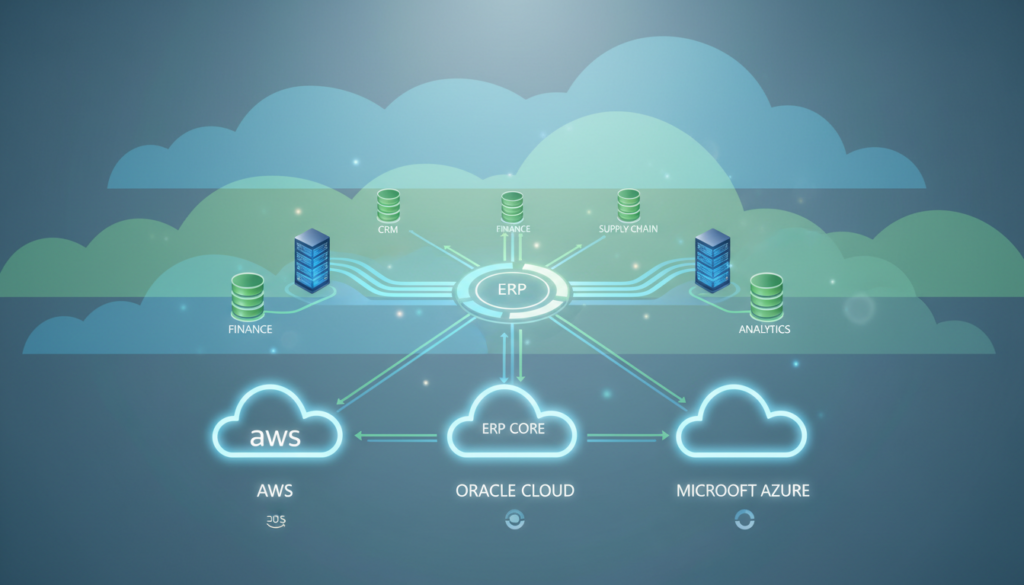
This approach to cloud architecture flexibility means designing systems that can grow, shrink, and integrate easily. It’s the difference between being held back by tech and being empowered by it. The benefits reach every part of the organization.
Benefits of a Flexible Architecture
A flexible cloud ERP offers big advantages. The main one is scalability. Businesses can add users, modules, or power without big costs.
It also means faster changes to meet market needs. When rules change or customer wants shift, an agile system can adjust quickly. This keeps companies ahead.
“The most successful digital transformations are those where the ERP system is a malleable tool, not a rigid framework. It should conform to business strategy, not dictate it.”
Connecting with the best tools becomes easy. Companies can pick top tools for CRM, analytics, or supply chain. They can link them up smoothly.
The following table contrasts key characteristics of flexible versus rigid ERP architectures:
| Aspect | Flexible Cloud Architecture | Rigid/Vendor-Locked Architecture |
|---|---|---|
| Scalability | Elastic, pay-as-you-grow model | Often requires costly license upgrades |
| Integration Capability | Open APIs, supports hybrid environments | Proprietary interfaces, limited connectivity |
| Adaptation Speed | Rapid configuration changes | Lengthy vendor-led modification processes |
| Cost Structure | Predictable operational expenditure | High capital expenditure for changes |
| Innovation Potential | Easily adopts new technologies | Dependent on vendor’s roadmap |
This agility gives a foundational advantage. It turns IT into a strategic enabler.
Impact on Business Growth
The real value of cloud architecture flexibility is in business results. Companies with adaptable systems can do things others can’t. This drives growth and leadership.
Consider mergers and acquisitions. A flexible ERP can add new units, data, and processes easily. This makes integration a manageable task, not a big problem.
Entering new markets or products is also faster. An agile system can set up local needs, currencies, and reports quickly. This speeds up market entry.
Real-world examples show this impact. A mid-sized manufacturer chose modular, open-source ERP. When they got a chance to buy a competitor, their system integrated it in six months. Their rival took two years, missing key chances.
This agility creates a big advantage. Businesses can try new things, change plans fast, and focus on what works. The system supports exploration, not just sticking to one plan.
In short, investing in cloud architecture flexibility means investing in future options. It makes sure today’s ERP doesn’t block tomorrow’s growth. The architecture becomes a base for ongoing innovation and staying ahead.
Key Strategies to Avoid Vendor Lock-In
To avoid vendor lock-in, we need to make smart choices. We should focus on systems that work well with others and can be easily changed. Here are some ways to make your system flexible.
Each strategy tackles a different part of the lock-in issue. Together, they build a strong base for your business.
Multi-Cloud Approach
Using just one cloud provider is risky. It makes your system dependent on one place. A multi-cloud strategy spreads your ERP across different clouds like AWS, Google Cloud, and Microsoft Azure.
This method has big benefits. It stops one vendor from controlling everything. You can pick the best services for each task.
For example, you could use one cloud for finance and another for CRM and analytics. Make sure your system is portable from the start. Use tools like Docker and Kubernetes for this.
Using Open Source Solutions
Lock-in often comes from proprietary code. An open source ERP system changes this. It lets you see and change the code.
This openness means you can customize deeply. It also means you don’t have to worry about vendors stopping support. The community helps make it better and safer.
Platforms like Odoo or ERPNext offer key business features without costs. You control your system. The focus shifts from buying licenses to getting help and support.
Selecting Modular ERP Components
The old days of all-in-one ERP suites are over. Now, it’s better to use a mix of the best parts. These parts work together through APIs.
Instead of one big suite, you pick what you need. You might choose a module for inventory from one vendor, finance from another, and HR from a third.
If something doesn’t work or costs too much, you can change it. This way, you can always improve your system. It’s the opposite of being locked in.
| Strategy | Core Principle | Key Benefit | Primary Risk to Mitigate |
|---|---|---|---|
| Multi-Cloud | Distribute workloads across multiple providers | Avoids provider-specific dependencies and pricing pressure | Increased management complexity and integration costs |
| Open Source ERP | Utilize transparent, publicly available source code | Full control over customization and future development path | Requires in-house or contracted technical expertise |
| Modular Components | Build a system from interchangeable, best-of-breed parts | Enables easy replacement of underperforming or costly modules | Ensuring seamless data flow and interoperability between modules |
These strategies work best together. Imagine a company using open source ERP on a private cloud but public cloud for forecasting. It might also use a third-party tool for supply chain analytics.
This mix makes your system very flexible. No one vendor controls everything. Your system is ready for new chances and safe from vendor problems.
Evaluating ERP Vendors
The evaluation phase is key for companies wanting to avoid being locked into one system. We see vendor selection as a strategic move, not just a simple step. It’s about finding partners who offer flexibility for the long term, not just short-term gains.
Assessing Vendor Reputation and Stability
Don’t just listen to what they say. Look at a vendor’s past and financial health to see if they can support you for years. There are several important areas to check.
First, check their financial statements or credit ratings. A stable vendor is less likely to make changes that could harm your service. Next, look at their client list and case studies, especially from similar businesses.
Lastly, ask about their future plans. A vendor committed to ongoing innovation shows they’re in it for the long haul. This ensures your investment is safe.
Compatibility with Existing Systems
Your new ERP should work well with what you already have. It’s crucial for smooth operations. True software portability depends on this.
We focus on two main areas:
- Technical Integration: Check the quality and support of the vendor’s APIs. Good APIs make integration easier and less prone to errors.
- Data Standards: Make sure the system uses common formats and supports standard protocols. This makes future changes easier.
Stay away from vendors that need a lot of proprietary software. You want a system that works together well, not one that’s hard to manage.
Understanding Contract Terms and Conditions
The contract is your guide for working with the vendor. Reading it carefully can help you avoid being stuck. We look closely at clauses about leaving and future costs.
Important parts to check include:
- Data Ownership and Access: The contract should say you own your data and the vendor will give it back in a standard format if needed.
- Exit Assistance: Look for clauses about how the vendor will help during a transition. This includes getting your data and support.
- Pricing and Escalation: Understand how prices change over time. Be careful of clauses that make it hard to reduce services or users.
- Service Level Agreements (SLAs): Make sure uptime and support response times are clear and have consequences if not met.
Negotiate these terms before signing. A vendor who won’t be fair in the contract may be hard to work with later.
By carefully choosing vendors based on stability, compatibility, and contract terms, you set up a flexible partnership. This careful approach is key to keeping control and ensuring your ERP helps your business grow.
Data Portability and Ownership
Data portability is more than just a technical feature. It’s a key right in today’s digital world. When we control our data, we shape our future. This part talks about how to keep that control, making sure your data is an asset, not a problem.
True flexibility means your data moves as freely as your business does. We focus on the legal and technical steps to make sure you can access and move your data easily.
Ensuring Data Access and Transferability
Your contract is your first defense. We make sure it includes clauses that let you access all your data, including past records. Service Level Agreements (SLAs) should require regular, full data exports in formats you can use.
Technically, you need a solid exit plan. This means setting up data extraction strategies that work alongside your daily tasks. Don’t wait for a crisis to find out if you can get your data.
Regular data audits check if your extraction methods work. We do these audits every quarter to make sure all data is accessible for transfer.

Importance of Data Standards
Open standards are the common language of data. Formats like JSON and XML are essential for a portable system. They make sure your data can be read by any modern system.
Proprietary formats can lock you in. They force you to use specific tools or pay for conversion services. We always avoid systems that use closed, undocumented data structures.
“In the cloud era, data that cannot be freely interpreted is data that is owned by the vendor, not the customer.”
Using common standards makes integration easier. It lowers the cost and complexity of future migrations. This makes your IT ecosystem more flexible and compatible.
Evaluating APIs for Integration
Application Programming Interfaces (APIs) are how your data flows. The quality of a vendor’s API affects your data extraction strategies and how quickly you can adapt.
We check APIs on three main points: strength, documentation, and following common protocols like REST or GraphQL. Weakness in any area is a big warning sign.
Good documentation is key. It should include examples, authentication methods, and detailed rate limits. Good documentation lets your team work on integrations without needing help.
The following table outlines key criteria for assessing ERP vendor APIs:
| Evaluation Criteria | Strong Indicator | Warning Sign |
|---|---|---|
| Documentation Quality | Interactive guides, code samples, and changelogs. | Outdated or incomplete docs, no support forums. |
| Protocol & Standards | RESTful design, OAuth 2.0, OpenAPI specs. | Proprietary protocols, SOAP-only endpoints. |
| Data Access Scope | Full CRUD operations on all data entities. | Read-only access for key tables, delayed data sync. |
| Rate Limits & Support | Clear, generous limits with premium support tiers. | Low thresholds that hinder business processes. |
Finally, test the APIs yourself before committing. A hands-on trial shows real-world performance. It confirms if the vendor’s tools fit your data extraction strategies. This careful check is the best way to ensure you have long-term data freedom.
Regularly Reviewing Your Cloud ERP
To keep your cloud setup flexible, it’s key to regularly check your ERP. Just one check isn’t enough. We suggest a continuous process to keep your ERP up-to-date. This way, you avoid getting stuck with outdated tech.
Regular checks make sure your ERP keeps giving value. It helps your business stay on track with new goals. This turns a one-time software buy into a valuable asset.
Establishing a Review Schedule
Start with a set review schedule. We suggest checking your ERP setup at least once a year. If your business is growing fast or in a changing market, check it twice a year.
Choose a team for these reviews. It should have IT, finance, and key business people. Keep track of what’s found and what needs to be done.
Metrics for Evaluation
Good reviews use data. You need to track certain metrics. These show if your ERP is working well and meeting your goals.
- Total Cost of Ownership (TCO): Watch all costs, like subscription fees and support. Look out for unexpected costs.
- Integration Ease: See how easy it is to add new apps or data. If it’s hard, it’s a problem.
- User Satisfaction Scores: Ask users how they feel. Low scores mean there might be issues.
- System Performance & Uptime: Check how fast and reliable your system is. It should meet your service level agreements.
- Strategic Alignment: See if your ERP supports new business plans or market changes.
Signs It’s Time for Change
Look for signs that your ERP isn’t working as well as it should. These signs mean it’s time to think about changing.
- Your vendor keeps delaying or canceling promised updates.
- Customizing your ERP gets too expensive and complicated.
- Getting data out for reports or moving it is hard because of special formats.
- Adding new tools costs a lot because of bad APIs.
- Users stop using the system, even with good training.
- The cost of using your ERP goes up every year, but it doesn’t add more value.
Spotting these signs early lets you plan a change. This way, you avoid expensive, last-minute moves.
Regular reviews are crucial for keeping your cloud setup flexible. They help you make smart, timely choices. This keeps your business agile and in charge of its tech future.
Employee Training and Knowledge Sharing
Organizational knowledge is key to keeping ERP systems independent. It’s not just about technical skills. We need to invest in our team to make our operation strong, no matter the vendor.
Importance of User Training
Training goes beyond just learning a vendor’s system. It’s about understanding the business processes it supports. When users get the why behind the how, they can adapt easily.
This kind of training helps staff work well in any system. It reduces the need for vendor-specific “super users.” Training different team members on various modules spreads out important knowledge.
A well-trained team is your best defense against getting stuck. It keeps your business running smoothly and makes changes easier if needed.
Creating a Knowledge Base
An internal knowledge base is like your company’s memory. It keeps the knowledge from setting up, integrating, and fixing your ERP. This document should be easy to find and updated often.
Important things to document include:
- Custom configurations: Detailed records of any non-standard setup.
- Integration logic: How data flows between the ERP and other systems.
- Workarounds and solutions: Fixes for common issues or process gaps.
- Decision rationales: Why certain paths were chosen during implementation.
Creating this resource takes effort. Start by choosing a curator. Encourage all power users to contribute. Use a platform that supports search and version control. This effort mirrors the open documentation found in open source ERP projects.
Your knowledge base turns individual skills into a shared asset. It keeps important information from leaving with an employee.
Encouraging User Feedback
Frontline users notice system issues first. Having formal feedback channels is crucial. It helps spot problems before they cost a lot.
Setting up simple, regular feedback is a good idea. This could be a monthly survey, a dedicated channel, or roundtable discussions. The goal is to make sharing insights normal.
The most valuable insights for improving system flexibility often come from the people who use it every day.
Listening to feedback shows that user experience is important. It builds a culture of continuous improvement and shared responsibility. This teamwork is key to successful open source ERP projects, where user input guides development.
By valuing and using user feedback, we improve our system and avoid future lock-in.
Legal Considerations in Vendor Choice
A flexible technical strategy can be ruined by a rigid contract. This makes legal checks a must when choosing a cloud ERP. We should see the vendor agreement as a blueprint for our future freedom.
Strong legal safeguards are key to enforce software portability over time. They turn plans into binding rules.
Contractual Clauses to Review
Some clauses in your service agreement need close attention. They are the keys to a smooth transition or to control during the relationship.
- Data Ownership and Portability: The contract must explicitly say you own your data. It should also outline data extraction formats, timelines, and costs (ideally zero) upon termination.
- Termination Rights: Look for clear, reasonable exit clauses. Avoid automatic renewals or penalties for switching vendors. You need a clear way out.
- Audit Rights: Ensure you can audit the vendor’s performance against the SLA and their security practices. This keeps them accountable.
- Service Level Agreements (SLAs): SLAs should have real penalties for not meeting standards. They should cover uptime, support response times, and data backup integrity.
Each clause affects your ability to move. Weak language here can lead to legal lock-in.
Intellectual Property Rights
Customizations and integrations for your ERP are a big investment. Who owns this intellectual property (IP) is key.
Many contracts say the vendor owns custom developments. This can block software portability. If you switch vendors, you might lose the right to use that code.
We must negotiate for clear IP ownership of custom work. Ideally, you should own the IP. At least, get a perpetual, royalty-free license to the code. This protects your investment and keeps your options open.
Compliance and Regulatory Issues
Regulations like GDPR and CCPA add complexity. They can create regulatory lock-in if not handled in contracts.
These laws give people rights over their data, including data portability. Your vendor must agree to help you comply. If they can’t handle data subject requests or secure data transfers, you’re at risk.
| Regulation | Key Requirement | Vendor Contractual Mandate |
|---|---|---|
| GDPR | Right to data portability (Article 20) | Vendor must provide personal data in a structured, commonly used, machine-readable format. |
| CCPA/CPRA | Right to access and data portability | Vendor must facilitate the disclosure and transfer of personal information upon verified request. |
| Both | Data protection by design | Vendor warrants that its services include appropriate technical and organizational security measures. |
Your agreement should require the vendor to follow relevant laws. It should also outline their duties in audits or data breaches. This shifts the compliance burden and prevents legal surprises that could trap you with a non-compliant provider.
In the end, a solid contract is your best tool for software portability. It makes flexibility a real, enforceable right.
Future-Proofing Your ERP Strategy
Our journey to avoid vendor lock-in doesn’t stop with a contract. A flexible cloud ERP needs a forward-thinking approach. We must create a strategy that grows with technology and market changes.
Anticipating Technological Changes
Technologies like AI, IoT, and blockchain are changing business. A modular ERP design lets us add these innovations easily. Good data extraction strategies are key here. They help us use data from new sources for better analytics and automation.
Staying Informed on Industry Trends
We can’t predict the future, but we can prepare. Talking to firms like Gartner and Forrester gives us a head start. Websites like CIO.com and TechTarget share useful tips. Going to industry events connects us with new ideas and practices.
Engaging with ERP Communities and Forums
Learning from others is very helpful. Joining spaces like the SAP Community Network or Oracle Cloud Customer Connect gives us direct insights. Forums for ERPNext or Odoo offer different views. These talks help us improve our data strategies and avoid lock-in.
Future-proofing is ongoing and active. It combines flexible architecture with a love for learning and community. This approach ensures our ERP supports long-term growth and agility.