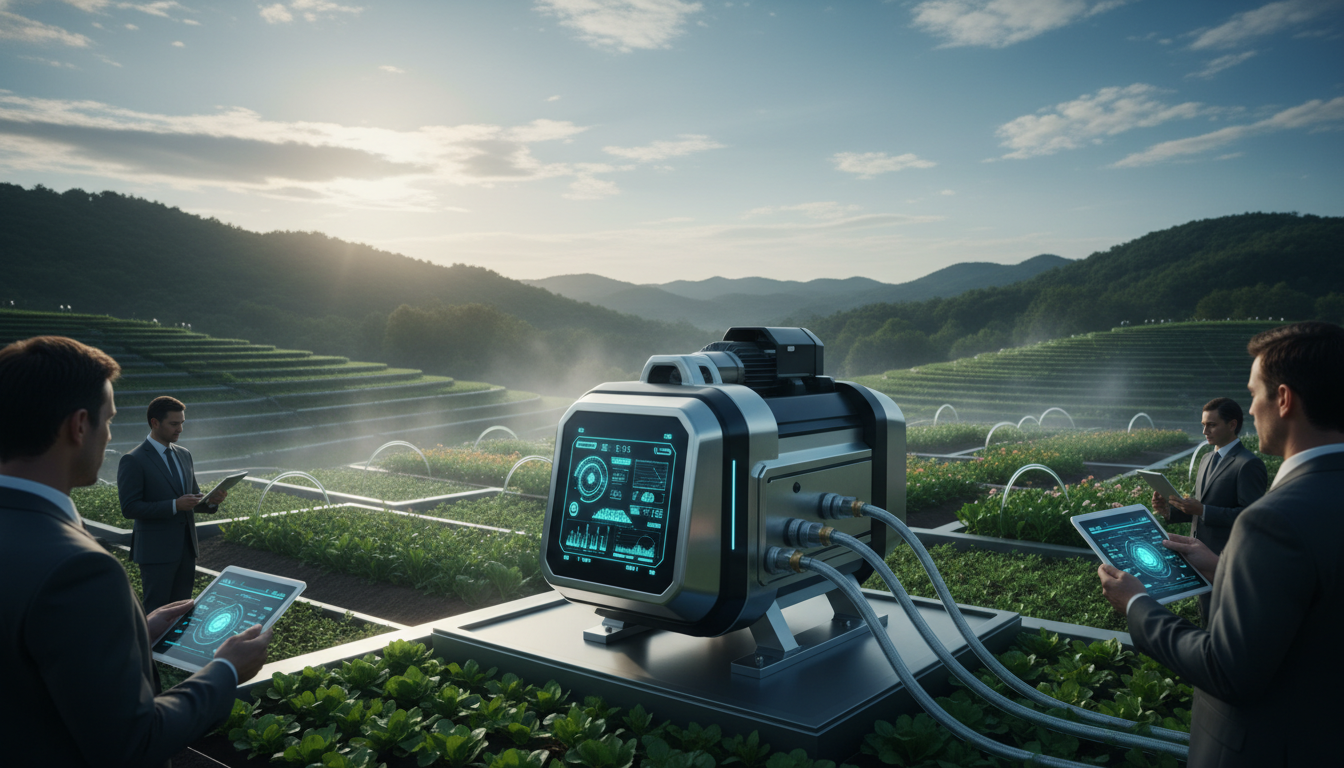
Modern farming is all about being more efficient and green. Farmers and managers need systems that can turn data into useful insights. This is more than just having tools.
This study looks at a powerful connection. It shows how high-pressure JET pumps work with agricultural technology enterprise resource planning (ERP) platforms. This link does more than just control pumps remotely.
The connection makes a closed-loop system for smart irrigation and resource use. Pump data goes straight into business software. This lets for quick changes and looking back at past data.
Our main point is simple. Connecting pump actions with digital planning tools is a big step forward. It’s key for farms to stay competitive and green in today’s world.
Key Takeaways
- Integrating JET pumps with AgTech ERP creates a transformative, connected system.
- This setup establishes a closed-loop for monitoring and managing irrigation automatically.
- Real-time data flow enables superior resource management and reduces waste.
- The system supports data-driven decision-making for the entire operation.
- It represents a shift from simple automation to true operational intelligence.
- This technological evolution is crucial for maintaining a competitive edge.
- Direct data integration is a foundational step for long-term, sustainable farming.
Understanding Smart Pump Technology and Its Benefits
Smart pump technology changes how we move water in farming. It moves from old mechanical systems to new, smart ones. We’ll look at what makes a pump smart, its parts, and how it helps farming.
What is a Smart Pump?
A smart pump is more than a simple water mover. It has its own brain and can talk to other systems. Unlike old pumps, it can change how it works based on what it sees and hears.
This smartness makes it a key part of a farm’s network. It can send and get messages, making it a core part of smart pump automation.
Key Features of Smart Pumps
Smart pumps have special parts that make them work well. These parts help control the pump and manage it from afar.
- Variable Frequency Drives (VFDs): These are the smart pumps’ brains. They let the motor run at different speeds, saving energy.
- Integrated Sensor Suite: Smart pumps have sensors for pressure, flow, temperature, and vibration. This data helps the pump adjust and warns of problems.
- Communication Modules: These modules let the pump talk to other systems, like ERP systems, over the internet.
- Robust Control Interfaces: Heavy-duty smart plugs are used for remote control and to connect the pump to bigger systems.
Benefits of Using Smart Pumps in Agriculture
Using smart pumps improves farming in many ways. It saves money and solves common problems in irrigation.
First, precise pressure and flow control protect irrigation systems. This ensures water is evenly distributed to crops.
Second, controlling the motor’s speed saves a lot of energy. A pump running at 80% speed uses half the power of one running full speed. This cuts down on electricity costs.
Lastly, smart pumps last longer and need less maintenance. This means less money spent on repairs and less downtime during important growing times. As one expert said,
“The shift to intelligent pumping isn’t just about saving water; it’s about optimizing every watt of energy and every hour of labor invested in the system.”
These benefits make farming more efficient and resilient. They help farms get ready for new AgTech solutions.
The Role of IoT in Modern Pump Systems
In today’s farming, a pump is more than a simple machine. It’s a source of data in a larger IT system. This change comes from the Internet of Things (IoT). IoT connects parts into a smart network. For irrigation, pumps become key players in farm management.
The main benefit of AgTech IoT integration is constant communication. Sensors on pumps and irrigation lines send data to a central point. This sets up a system for smart automated irrigation IT.
How IoT Enhances Pump Efficiency
IoT makes pump management smarter. It looks at data to find problems we can’t see. A small drop in pressure might mean a clogged filter far away. A tiny increase in power use could signal a bearing issue.
This detailed look lets us fine-tune pump performance. The system adjusts speed to match water needs, saving energy. It also plans maintenance based on actual wear, not just time. This prevents expensive repairs during key growth times.
IoT boosts pump efficiency a lot. We see less downtime, lower energy costs, and longer-lasting equipment. The pump works best because IoT keeps it that way.
Real-Time Data Collection and Monitoring
IoT’s strength comes from its constant data gathering. Every second, smart pumps send important stats. This data is key for making smart decisions in automated irrigation IT.
People can see this data on easy-to-use dashboards. They don’t just check if the pump is on. They watch a range of live data:
- Flow Rates: Exact water delivery across all zones.
- Pressure Levels: Quick alerts for leaks or blockages.
- Power Consumption: Tracking energy use to cut costs.
- Motor Health: Data on vibration, temperature, and load to predict failure.
This constant watch means problems are caught and fixed fast. A drop in pressure alerts us before crops suffer. An unusual vibration reading means a service call before a big failure. This quick action is the first step in using data well.
The data from here goes into bigger farm management software. Good AgTech IoT integration makes this data useful for business decisions. It turns pump data into useful business insights.
Exploring AgTech ERP Systems
Smart pumps are key for modern irrigation, but AgTech ERP systems are essential for managing farms. They control everything from a digital platform. This is crucial for AgTech IoT integration. Without it, data from pumps and sensors is wasted.
Definition of ERP in Agriculture
ERP in agriculture is more than just business software. It’s a specialized tool for managing farm workflows. It handles everything from field operations to sales.
Its main value is in providing a single source of truth. It connects data from various sources, including irrigation systems. This gives farmers the insights they need for better agricultural water management.
Popular AgTech ERP Solutions
Several strong AgTech ERP platforms lead the U.S. market. Each is designed for different farm sizes and types.
- Trimble Ag Software: Excels in field data management and mapping, integrating well with precision ag hardware.
- Granular (an Corteva company): Offers a wide range of tools for farm business management, financials, and sustainability.
- John Deere Operations Center: Integrates with Deere equipment, providing detailed data analysis tools.
- FarmLogs (acquired by Bayer): Popular among row-crop farmers for planning, monitoring, and financial insights.
Key Features of Effective ERP Systems
Not all ERP systems are the same for farms. A good one must have specific modules for decision-making. Key features include:
- Inventory & Supply Chain Tracking: Keeps track of seed, fertilizer, and chemicals in real-time, avoiding shortages or overstocking.
- Labor & Equipment Management: Schedules tasks, tracks worker hours, and monitors machinery use and maintenance.
- Financial Planning & Analysis: Handles budgeting, expense tracking, and yield-based profitability modeling.
- Compliance & Reporting Tools: Makes it easier to keep records for food safety and environmental regulations.
A modern ERP must have a water management module. This module is key for AgTech IoT integration. It uses real-time data to control irrigation, track water use, and detect leaks. This ensures water is used efficiently.
Integrating Smart Pumps with ERP Systems
Smart pump technology and AgTech ERP systems together change how farms work. This mix is the heart of a modern farm. It turns data into actions that make a difference.
AgTech IoT integration connects field devices to management software. It makes isolated devices work together as one smart system. This is key for a farm that responds quickly to data.
Benefits of Integration
Connecting smart pumps to your ERP system brings many benefits. It makes operations smoother and increases profits. It’s more than just controlling things from afar.
- Automated Maintenance Scheduling: The system can create work orders on its own. It looks at pump data and knows when maintenance is needed.
- Precision Resource Correlation: You can see how water and energy use relate to crops and field conditions. This shows how efficient inputs are.
- Unified Data Visibility: All data is in one place. Managers can see irrigation costs, pump health, and more, along with financial and inventory info.
- Enhanced Decision Support: The ERP uses all this data to give insights. It suggests the best irrigation plans based on weather, soil, and crop growth.
These advantages help you manage better. You move from fixing problems to making things better.
Steps for Successful Integration
Putting a unified system in place needs a careful plan. A clear plan ensures a smooth setup and gets the most from your tech.
- Define Objectives and Scope: Start by knowing what you want to achieve. Do you want to save water, cut energy costs, or automate reports? Decide what data needs to move between the pump and ERP.
- Audit System Compatibility: Make sure your smart pumps and ERP can talk to each other. Check for APIs or if you need middleware. This tech setup is key.
- Establish Data Mapping Protocols: Figure out how field data will match up with ERP info. For example, link “pump runtime” to “water usage volume” and then to “operational cost per zone.” This clear mapping is crucial for AgTech IoT integration.
- Configure API Connectivity and Testing: Work with your IT team or vendor to set up secure data flows. Test everything in a safe setting before going live to ensure it works right.
- Train Your Team: Teach farm managers and operators how to use the new system. They should know how to read dashboards, handle alerts, and use new reports.
This step-by-step guide is a solid plan. It helps you go from planning to a working automated irrigation IT strategy. It makes information flow smoothly, leading to smarter farming.
Data Analytics: Transforming Pump Performance
Data analytics goes beyond simple automation. It turns pump performance metrics into a strategic plan for agricultural water management. When pump data is integrated into an AgTech ERP, it becomes a powerful tool for efficiency and foresight.
Analytics make integration smart. It finds hidden inefficiencies, predicts problems, and improves every irrigation event.
How Data Analytics Improves Decision-Making
Analytics changes farm management from reactive to predictive. Instead of just reacting to problems, you can prevent them. This proactive approach is the main benefit of automated irrigation IT.
Advanced algorithms analyze data to spot small issues. They catch problems like pressure drops or energy use changes early. This helps avoid big failures.
Analytics also optimize irrigation schedules. It uses environmental models to figure out water needs. This means delivering water exactly when and where it’s needed, saving water and reducing waste.
| Analytics Function | Data Input | Business Outcome |
|---|---|---|
| Predictive Maintenance | Vibration, temperature, power draw | Reduced downtime, lower repair costs |
| Irrigation Optimization | Soil moisture, weather forecast, ET rates | 20-30% improvement in water use efficiency |
| Leak Detection | Flow rate, pressure consistency | Prevents water loss and soil erosion |
| Energy Management | Pump runtime, kWh consumption | Lower operational costs, sustainability reporting |
Case Studies of Successful Implementations
Our research shows real benefits from integrated systems. Here are some examples of how analytics make a difference.
Case Study A: Midwestern Row Crop Operation
A 2,000-acre farm connected their smart pumps to their ERP. Analytics found 15% of irrigation was unnecessary. By automating, they cut water use by 22% in one season. Now, they decide on irrigation in minutes, not hours.
Case Study B: California Almond Orchard
This grower used analytics for maintenance. It warned of a pump failure two weeks early. They fixed it before it happened, saving $75,000 in potential losses.
These stories show data analytics is real and valuable. It turns pump data into profits, sustainability, and resilience for farms.
Remote Monitoring and Control of Pump Systems
IoT goes beyond just collecting data. It’s about taking action right away, no matter where you are. With remote monitoring and control, pump systems become more than just machines. They become key players in farm management. This is what a full AgTech IoT integration looks like in action.
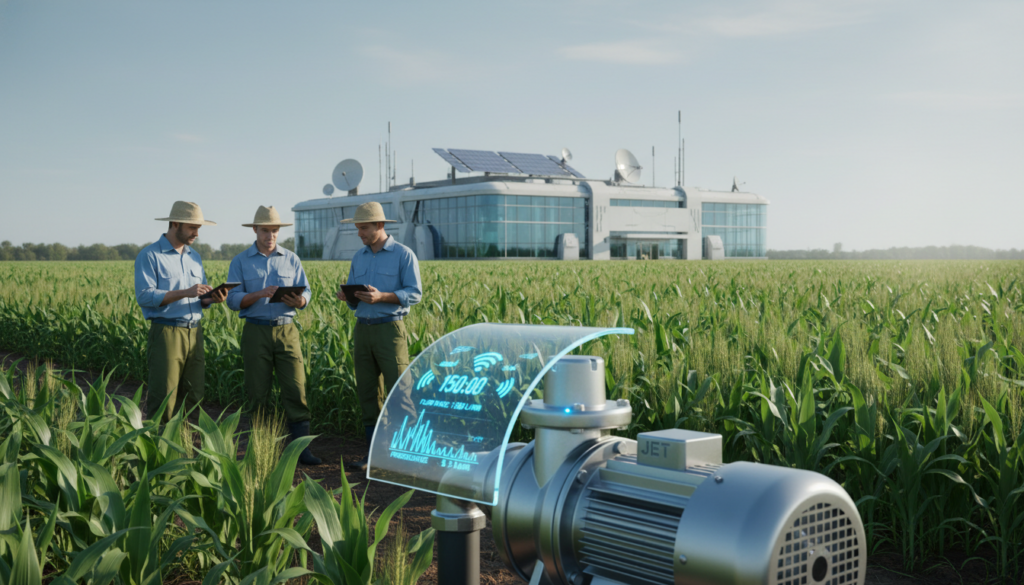
Now, operators can manage irrigation, fertigation, and system health from anywhere. A smartphone or computer becomes your control center for water systems.
Benefits of Remote Access
Remote access brings many benefits. First, it offers 24/7 system oversight. You can check on your pumps, flow rates, and pressure levels from anywhere. This makes sure everything runs smoothly, even when you’re not there.
Second, it means a rapid response to alarms. If something goes wrong, like a pump failure, you’ll know right away. This lets you fix problems fast, preventing water loss and damage to crops.
Lastly, remote control lets you make dynamic operational adjustments. You can change pump schedules or shut down systems quickly. This saves resources and protects your investment, especially during sudden weather changes.
Tools for Remote Monitoring
A good remote management system needs both software and hardware. The software includes:
- SCADA (Supervisory Control and Data Acquisition) Interfaces: These platforms give you a detailed view of your pumps and let you control them.
- Dedicated Mobile Applications: Many providers offer apps for easy monitoring and control on the go.
The hardware is also key. This is where heavy-duty smart plugs come in. These are not just any plugs. They’re built tough to handle the rough conditions found in farms.
These heavy-duty smart plugs are crucial for safe remote power cycling. If a pump controller needs a reset, you can do it from your app. This saves time and reduces downtime.
These tools work together to make data useful and actionable. They are the heart of a strong AgTech IoT integration.
Enhancing Sustainability through Pump Optimization
Sustainability in farming is now a real goal, thanks to agricultural water management. By linking high-pressure JET pumps with AgTech ERP platforms, we create a new way. This way, making farms more efficient also helps the environment.
This connection makes every irrigation choice better for the future. It’s all about saving resources for the long run.
Reducing Water Waste
Old ways of watering often waste a lot of water. Smart pump automation fixes this. It uses sensors and weather data to water crops only when needed.
This method cuts down on over-watering and leaks. It saves a lot of water right away.
- Precision Scheduling: Pumps turn on based on real-time data, not just a timer.
- Flow Monitoring: It tracks water output to find leaks fast, saving thousands of gallons.
- Zone-Specific Control: Each field zone gets its own watering plan, avoiding too much water.
This new way of managing water is proactive and data-driven. It saves water for future seasons, not just now.
Eco-Friendly Practices Enabled by Technology
Optimizing pumps leads to more sustainable farming. A great example is linking pump schedules with solar power.
An ERP system can adjust pump times to match when the sun is strongest. This cuts down on energy from the grid and lowers carbon emissions.
Also, smart pump automation helps keep fertilizers and chemicals from polluting water. This is because water is used just the right amount, keeping nutrients where they belong.
This protects local waterways and makes farms better for the environment. It shows how technology can help meet environmental rules and keep communities healthy.
In the end, combining pumps with data platforms makes farming more efficient. Farmers can now reduce their environmental impact and make their farms stronger. This is what modern, responsible agricultural water management is all about.
Future Trends in Smart Pump Technology
The future of farming depends on combining physical tools with digital smarts. New pump technologies are leading the way. They will learn, predict, and act on their own, with little human help. This change will come from big advances in several areas, changing how we use water and energy on farms.
Innovations on the Horizon
Several new technologies are getting ready to change smart pump automation for the better. These ideas are not just dreams but are being worked on and will soon be available.
Artificial intelligence is getting smarter, moving from simple tasks to predicting when things will break. New algorithms will use past data, current sensor readings, and weather forecasts to spot problems early. This means less downtime and more work done.
Also, sensors are getting better and cheaper. Soon, pumps will have hyperspectral and acoustic sensors. These will check water quality, pump health, and soil moisture in detail. This will give us a lot more information about how things are working.
Keeping data safe and traceable is also key. Blockchain technology is being used to protect irrigation data. It creates a permanent record for reports, certifications, and supply chain tracking.
- AI-Driven Prognostics: Systems that forecast maintenance needs before a fault occurs.
- Advanced Sensor Suites: Beyond flow and pressure, detecting water composition and mechanical health.
- Blockchain for Compliance: Tamper-proof logging of water usage, energy consumption, and chemical application.
Predictions for the Next Five Years
Looking ahead, we see big changes in irrigation tech. The main focus will be on making systems more independent and efficient through AgTech IoT integration.
In the next five years, most new smart pumps will be part of a cloud-based system. The hardware will connect to a larger digital farm network. This will let pumps adjust their work based on data from soil sensors, weather stations, and satellite images.
This will lead to irrigation systems that can adjust on their own. Pumps will not just follow a schedule but will find the best way to water, saving energy and water. This is the goal of smart pump automation: a system that works well with little effort from farmers.
The irrigation system of the future will be an autonomous utility, managed by software and monitored by AI, freeing the farmer to focus on higher-value strategic decisions.
In summary, the next five years will see a big change. The lines between pump, platform, and farmer will blur. Successful AgTech IoT integration will turn data into useful actions, driving sustainability and profit.
The Importance of Maintenance and Support
Modern irrigation tech brings new care needs. We can’t just install and forget. Keeping your smart pump automation running well needs regular upkeep and expert help.
This care keeps your system efficient for years. It protects your investment and ensures your crops grow well.
Regular Maintenance Practices
Modern pumps mix mechanical parts with digital smarts. Our upkeep must cover both. A proactive plan avoids downtime and data loss.
We suggest a tiered upkeep plan:
- Software & Firmware Updates: These updates keep your system’s brain sharp. Automate or schedule them when usage is low.
- Sensor Calibration and Diagnostics: Sensors can drift. Regular checks and calibration are key. Use system tools to check sensor accuracy every quarter.
- Physical and Electrical Inspection: Check the pump’s housing, seals, filters, and wiring. Look closely at heavy-duty smart plugs. They handle high currents and must be checked for wear and corrosion.
Following a schedule makes upkeep valuable. Here’s a basic quarterly checklist for IoT pumps.
| Maintenance Task | Recommended Frequency | Key Benefit |
|---|---|---|
| Check and clean intake filters/strainers | Monthly | Prevents clogging and maintains optimal flow rate |
| Inspect electrical panels and heavy-duty smart plugs for heat or damage | Quarterly | Reduces risk of electrical fault and system shutdown |
| Calibrate pressure and flow sensors | Quarterly | Ensures data accuracy for automated decisions |
| Review system error logs and performance alerts | Weekly | Enables early detection of minor issues before they escalate |
| Verify software is on the latest stable release | Bi-annually | Maintains security, stability, and access to new features |
Support Resources for Pump Operators
Even with the best upkeep, questions and problems can pop up. Having strong support resources is key. You don’t need to know everything.
We break down essential support into three levels:
- Manufacturer Technical Support: Your first stop for hardware or software issues. Good providers offer quick help and remote diagnostics.
- Online Knowledge Bases and Communities: Great for self-help. Look for manuals, videos, and forums for advice.
- Professional Service Partnerships: For complex needs, team up with experts. They offer ongoing monitoring and help.
Using these resources well cuts downtime and boosts your team’s confidence. It turns smart pump automation into a managed asset. Aim for a clear solution path for any problem, ensuring your system lasts and you stay calm.
Case Studies: Successful Integrations in Agriculture
For farmers looking for proof, real-world examples are the best. These stories show how AgTech IoT integration solves real problems and brings real benefits. We’ll look at two examples and what they teach us.
Highlighting Successful Deployments
A large grain farm in the Midwest was the first case. They used center-pivot irrigation but had uneven water and high energy costs. Their old system made it hard to manage water well.
They fixed this by linking JET pumps with their ERP. The pumps sent data to the system. Then, the ERP made better irrigation plans based on soil moisture and weather.
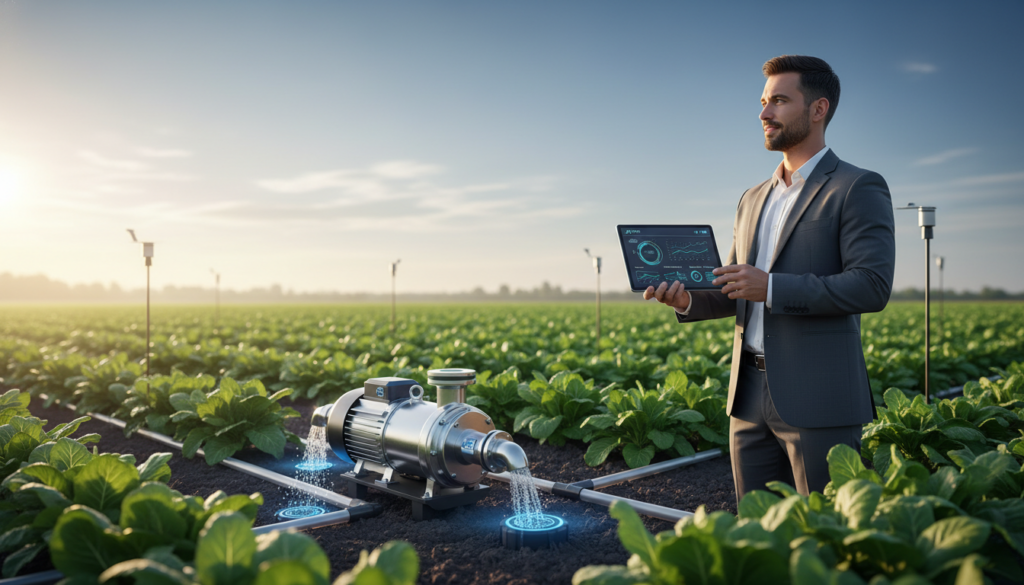
In California, an almond orchard faced a different challenge. They needed to water each block just right, but it was hard to do manually. They wanted a system that could do this automatically.
By using IoT JET pumps with their ERP, they got the control they needed. The system used soil sensors to water exactly where it was needed. This was the best way to use data for irrigation.
Lessons Learned from Integration
Every project teaches us something. These farms showed us what works.
- Data Standardization is Key: Pumps and ERPs need to talk the same language. Plan this from the start to avoid delays.
- Staff Training Cannot Be an Afterthought: Even the best system fails if people don’t know how to use it. Good training is key.
- Start with a Pilot Program: Begin with one pump or zone. This lets you test and learn before going big.
- Clear Ownership of Data: Know who’s in charge of the system. This avoids confusion and keeps things running smoothly.
These lessons show that success in AgTech IoT integration depends on more than just tech.
Impact on Productivity
The real test is how it affects the bottom line. In these cases, the results were clear.
| Metric | Midwest Grain Farm | California Almond Orchard |
|---|---|---|
| Water Savings | 22% reduction in annual usage | 18% reduction, with improved distribution uniformity |
| Energy Cost Reduction | 15% lower pump-related electricity costs | 12% savings via optimized pump run times |
| Labor Efficiency Gain | Estimated 8 hours per week saved on irrigation management | Eliminated daily manual valve checks across 50+ zones |
These savings also led to better crops. The almond grower saw better consistency, which helped their market. The grain farm kept more water during a dry spell, protecting their crops.
These results mean stronger finances and better farming. They show that smart pump tech with ERP is a smart investment for farming.
Training and Development for Smart Pump Technology
Success in agriculture depends on more than just technology. It also relies on the skills of those using it. We can set up the most advanced smart pump automation systems. But, they only work well if the people using them know how.
This means training and development are key. They are not just nice to have, but essential for success.
Training Programs for Operators
Good training for irrigation systems covers a lot. It connects the physical parts with the digital side. A good program has two main parts.
The first part is hands-on training for the pumps. Operators learn how to install, maintain, and fix them. They also learn about pressure and flow.
The second part is about the software and how to use it. This is where operators learn about automated irrigation IT. They learn to use the ERP dashboard, understand data, and schedule irrigation.
Key parts of software training include:
- Learning to use the dashboard and data.
- Setting up irrigation schedules.
- Understanding system alerts and reports.
- Basic data entry in the ERP system.
Many companies offer certified training. This can be in-person, online, or through video tutorials.
Importance of Continuous Learning
First training is just the start. The world of smart pump automation and software keeps changing. Continuous learning is key to staying ahead.
Software gets updates and new features all the time. Without ongoing education, operators might not use the system fully. We believe in a culture of learning where skills grow over time.
There are many ways to keep learning:
- Going to vendor webinars and conferences.
- Taking online courses on data analytics.
- Sharing knowledge within the team.
- Joining online forums to share best practices.
By keeping skills sharp, teams can make better decisions. They can avoid downtime and use resources better. Investing in your team is the best way to protect and grow your technology investment.
Conclusion: The Future of Smart Pump and ERP Integration
The journey to a fully optimized farm relies on connectivity. Our study reveals that linking smart JET pumps with advanced AgTech ERP systems is key.
Recap of Key Points
Modern smart pumps are IoT-enabled, offering precise control and important performance data. Systems like Trimble Ag Software and John Deere Operations Center serve as central ERP hubs. By connecting these, we create a unified command center.
Data flows from field pumps straight into business intelligence tools. This connection brings real benefits. It leads to better agricultural water management through automated scheduling and leak detection.
Resource use becomes efficient and sustainable. The core value is in the AgTech IoT integration. It merges physical operations with digital oversight.
Final Thoughts on the Evolution of AgTech Systems
The blend of pump technology and enterprise software marks a new era. Agriculture is moving from manual to automated, insight-driven management. The next step will see even tighter feedback loops.
Pump systems will self-optimize using ERP data on soil conditions and irrigation budgets. Adopting this integrated approach needs careful planning. It involves choosing compatible technologies and training operators.
The outcome is a stronger, more data-aware farm. Mastering agricultural water management through robust AgTech IoT integration defines today’s agricultural enterprise.