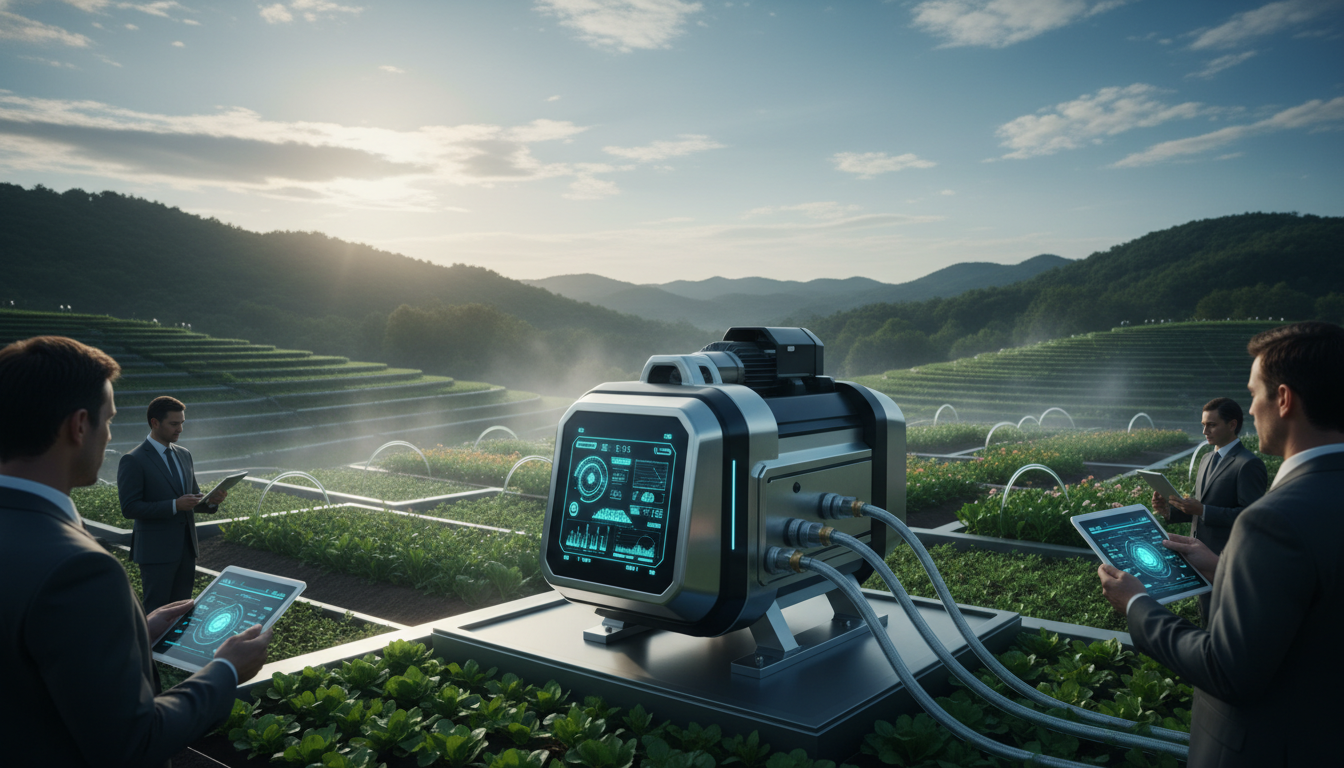
Managing a big nursery expansion is very complex. It involves a lot of money for things like greenhouses and irrigation systems. Without good tracking, these costs can get out of hand.
Bad CapEx management can cost a lot more than just money. It can also mean missing chances and losing profits. That’s why a special ERP system is key.
An agricultural financing ERP helps manage these big projects well. It makes tracking capital spending clear and easy. This article uses real examples to show how the right software can avoid overspending and open up new chances.
Key Takeaways
- Big nursery projects need careful, high-value investments.
- Using spreadsheets for tracking can lead to mistakes, delays, and lost money.
- A special ERP system gives real-time, accurate views of spending on projects.
- Good budget control boosts return on investment and makes operations more efficient.
- Choosing a strong CapEx tracking software is a smart move that pays off.
- It connects with other areas like buying, inventory, and accounting for a complete financial view.
- The aim is to move from just reporting costs to actively managing investments.
Understanding Agricultural Financing ERP Systems
For nursery owners, an ERP for agricultural financing is essential, not just a luxury. Standard software can’t handle the unique needs of growing operations. We need a system designed specifically for agribusiness.
This specialized system combines financial functions with the daily tasks of plant production and asset management. It offers a single source of truth for your entire operation.
What is Agricultural Financing ERP?
An Agricultural Financing ERP is a unified software platform. It combines financial tools with farming and nursery operations. It’s like the central nervous system for your nursery’s finances and production.
Unlike generic accounting software, this system understands agricultural cycles. It links budgeting and accounting to inventory, procurement, and project timelines. This connection is key for tracking investments in greenhouses, irrigation systems, or land.
It’s the command center where financial and crop data meet. You can see how new equipment expenses affect production costs for the next season. This holistic view is impossible with disconnected spreadsheets and programs.
Key Features of ERP in Agriculture
The power of an agricultural ERP lies in its specialized features. These functionalities address the precise pain points of farm and nursery managers. They transform complex data into actionable insights.
Here are the non-negotiable features for any serious agribusiness:
- Crop Cycle Costing: This feature allocates expenses to specific crops or batches across their entire growth cycle. It helps you pinpoint the true profitability of each plant variety, from seedling to sale.
- Grant and Subsidy Management: Many agricultural projects rely on external funding. A robust ERP tracks application deadlines, compliance requirements, and fund utilization. It ensures you meet all reporting obligations to secure and retain financing.
- Asset Lifecycle Tracking: From a new tractor to a climate-control computer, this tool monitors every capital asset. It logs purchase price, depreciation, maintenance schedules, and eventual disposal. This is crucial for accurate financial reporting and replacement planning.
- Compliance Reporting: The agricultural sector faces strict regulations. A dedicated ERP automates the generation of reports for food safety, environmental standards, and labor laws. It reduces audit risk and administrative burden.
Implementing an agricultural financing ERP provides a structured framework for decision-making. It moves your nursery beyond simple bookkeeping into strategic financial stewardship. The right system turns data into a competitive advantage.
Importance of CapEx in Nursery Projects
Smart capital investments are key to a nursery’s success. They help nurseries grow and thrive. Understanding and managing Capital Expenditure (CapEx) is crucial. It supports the assets that make a nursery efficient and productive.
Good nursery investment management means making smart CapEx choices. These choices lead to better profits in the future.
Defining Capital Expenditure
Capital Expenditure is money spent on buying, improving, and keeping physical assets. In nurseries, these are big purchases that add value over time. They help the nursery grow and produce more in the future.
Examples of CapEx in nurseries include:
- Land Development: Preparing new land for planting.
- Greenhouse Construction: Building structures for year-round growing.
- Irrigation Systems: Installing automated watering systems.
- Specialized Machinery: Buying big machines like tractors and harvesters.
These assets last more than a year and are listed on the balance sheet. Their cost is spread out over time through depreciation. This matches the expense with the revenue the asset generates.
CapEx vs. OpEx in Agriculture
It’s important to know the difference between CapEx and Operating Expenses (OpEx). This affects your financial reports, taxes, and farming ROI.
Operating Expenses are daily costs like seeds, fertilizer, and labor. They keep the nursery running but don’t increase its value much.
Mixing up expenses can make your nursery’s financial health look worse. For example, treating a perennial plant as an OpEx would mess up your profits. This makes it hard to manage your nursery investment well.
The table below shows the main differences:
| Aspect | Capital Expenditure (CapEx) | Operating Expense (OpEx) |
|---|---|---|
| Primary Purpose | Buy/upgrade long-term assets | Cover daily operations |
| Financial Statement | Balance Sheet (as an asset) | Income Statement (as an expense) |
| Tax Treatment | Depreciated over the asset’s life | Fully deducted in the current year |
| Nursery Examples | New greenhouse, land purchase, drilling a well | Monthly water bill, seasonal labor wages, potting soil |
| Impact on farming ROI | Long-term; improves efficiency and scale over years | Short-term; affects immediate profit margins |
Good CapEx management is key to growing your nursery. By making smart investments, you can boost your farming ROI and ensure your nursery grows sustainably.
Benefits of ERP for CapEx Management
Modern ERP software brings big changes for managing big costs in nursery projects. We move from old ways to a new, data-driven approach. This change is not just about keeping records. It’s about controlling the money that drives growth and stability.
Real-Time Tracking of Expenses
Old spreadsheets can lead to surprises. An CapEx tracking software in ERP changes this. It shows live data on funds, orders, and payments all in one place.
This live view is a big help. Managers can see the money status of projects like new greenhouses or irrigation upgrades. They can spot budget issues fast and fix them quickly. This stops small problems from becoming big financial issues.
Live data helps in making decisions. If a supplier wants more money for special equipment, you can see the impact right away. This helps in making better deals and finding other sources before spending, keeping the budget safe.
Improved Budgeting and Forecasting
Good budgets come from reliable past data. An ERP system keeps all past spending in one place. This helps make better plans for future growth or updates.
A key feature is budget vs actual ERP reports. It’s not just for year-end checks. It helps spot issues as they happen. Knowing why spending went up helps plan better for the future.
We use this data to make forecasts that show why new investments are smart. Instead of guesses, we have solid data from past projects. This makes budgeting a strategic, not just an administrative task.
| Aspect | Traditional Budgeting | ERP-Enhanced Budgeting |
|---|---|---|
| Data Source | Disconnected spreadsheets & estimates | Integrated, historical project data |
| Variance Analysis | Manual, periodic, often delayed | Automatic, real-time alerts |
| Forecast Accuracy | Low, based on limited insights | High, driven by actionable trends |
| Stakeholder Reporting | Static documents | Interactive dashboards and reports |
In the end, ERP makes spending on capital a clear driver of value. With budget vs actual ERP insights, every dollar spent is linked to better operations and more money. This clarity is key for growing in the tough nursery market.
Key Components of CapEx in Nursery Operations
Capital expenditure in nursery operations is divided into key areas. Knowing where to invest is crucial for success. Funds go into physical assets and digital systems.
Each area needs careful planning and a big upfront investment. Understanding them is the first step to managing your finances.
Infrastructure and Equipment Investments
This category includes the physical assets you can see and touch. They are the foundation of a nursery’s operations. These investments have long lifespans and big tax implications.
Climate-controlled greenhouses are a big investment but essential for year-round production. They manage temperature, humidity, and light automatically.
Automation also applies to potting and material handling. Automated potting lines and conveyor systems speed up production. They cut labor costs and improve consistency, paying off over time.
Post-harvest infrastructure is also critical. Cold storage facilities keep inventory fresh. A reliable delivery fleet ensures products reach customers in top condition. These assets boost sales and customer satisfaction.
Technology and Software Solutions
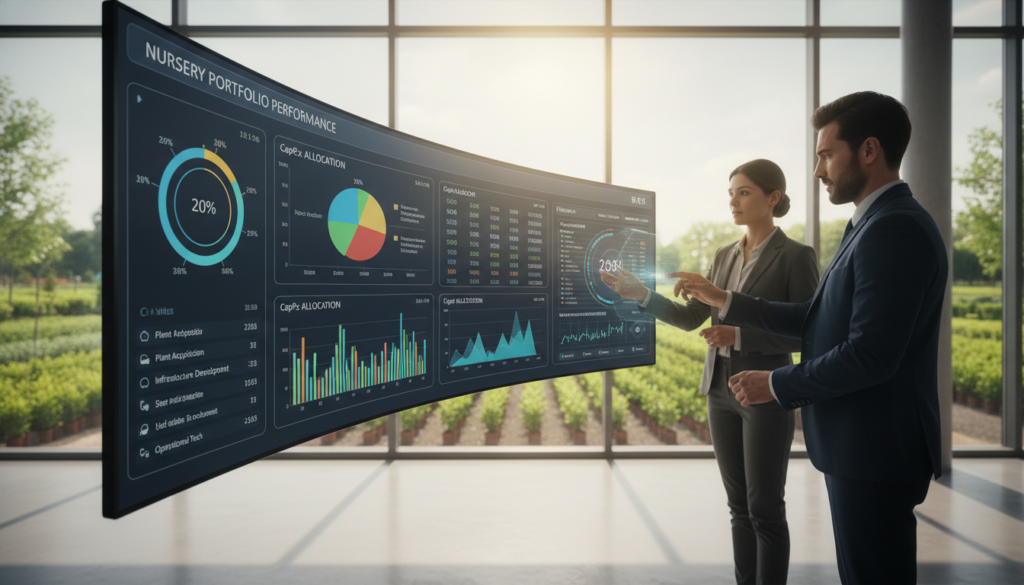
Digital investments are now vital in nursery management. Software and systems drive efficiency. They should be planned and budgeted for like any physical asset.
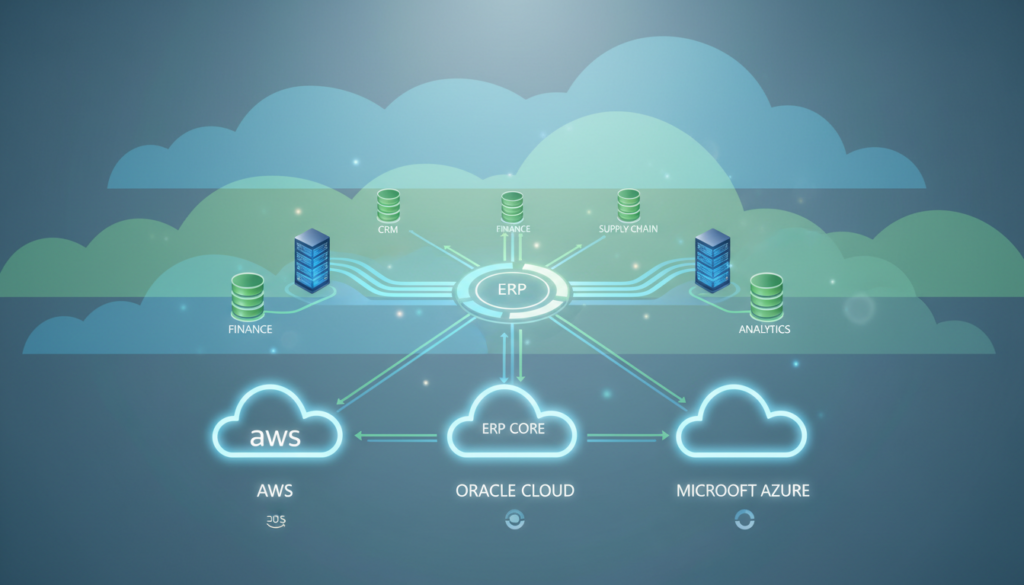
The ERP system itself is a significant investment. It connects finance, inventory, and sales. A strong ERP provides data for strategic decisions.
Beyond ERP, specialized solutions make a nursery “smart”. IoT sensors collect data on soil moisture and climate. Automated irrigation control software optimizes water and nutrients. This technology reduces waste and improves plant health.
Seeing technology as a capital asset changes the perspective. It’s not just an operational cost. It’s an investment in data, control, and competitive advantage.
| CapEx Component Category | Primary Examples | Key Benefit | Typical Lifespan & Consideration |
|---|---|---|---|
| Infrastructure & Equipment | Greenhouses, automated lines, cold storage, vehicle fleet | Creates production capacity and physical workflow | Long (5-15+ years). Requires maintenance and depreciation planning. |
| Technology & Software | ERP system, IoT sensors, automation software | Enhances decision-making, control, and operational efficiency | Medium (3-7 years). Faces faster obsolescence; requires updates. |
| Financial Characterization | Tangible, Fixed Assets | High upfront cost, depreciates over time | Easier to finance through traditional loans. |
| Financial Characterization | Intangible, Digital Assets | Recurring update costs, drives ROI through efficiency | May involve subscription models (SaaS) alongside purchase. |
A balanced approach to nursery investment management is key. Physical assets enable scale. Digital assets enable smart, profitable scale. Ignoring either leaves potential growth and efficiency untapped.
Implementing ERP for Capital Expenditure Tracking
Putting CapEx tracking software into action is more than just a theory. It requires a careful, step-by-step approach. A hasty setup can lead to budget overruns and system rejection. We will guide you through a proven path to integrate an agricultural financing ERP successfully.
Steps to Integrate ERP in Your Nursery
A phased approach reduces risks and builds confidence. Follow these four core steps to ensure your new system controls capital expenditure effectively.
- Conduct a Comprehensive Needs Assessment. Start by auditing your current CapEx processes. Identify pain points like manual data entry for equipment purchases or unclear approval workflows. Define clear objectives for what your ERP must achieve.
- Execute Rigorous Vendor Selection. Not all ERP systems are built for agriculture. Evaluate vendors based on their experience with nursery operations, scalability, and specific CapEx tracking modules. Request demos focused on asset lifecycle management.
- Plan and Execute Data Migration. This is often the most critical phase. Clean your existing asset data before import. A messy chart of accounts will cripple reporting. Start with a pilot dataset, like all greenhouse structures from the past year, to validate accuracy.
- Run a Focused Pilot Test. Select one upcoming capital project, such as a new irrigation system installation, to test the ERP live. Involve the project manager and finance team. Use this test to refine workflows before a full-scale rollout.
Best Practices for Transitioning
Our experience shows that technical steps are only half the battle. Adopting these best practices safeguards your investment and drives user adoption.
- Secure Executive Sponsorship Early. Leadership must champion the project. Their active support secures budget and motivates team members to engage with the new agricultural financing ERP.
- Start with a Clean, Standardized Chart of Accounts. Define asset categories, depreciation methods, and cost centers precisely before go-live. This foundational step is non-negotiable for accurate CapEx tracking software reports.
- Involve Project Managers from Day One. These end-users understand the nuances of nursery projects. Their input during configuration ensures the system matches real-world workflows for purchasing and installing capital assets.
- Invest in Phased Training. Roll out training sessions tailored to different roles. Accountants need different knowledge than operations managers. Continuous support prevents frustration post-implementation.
To visualize common hurdles and their solutions, review the following table. It contrasts frequent pitfalls with proactive best practices.
| Common Implementation Pitfall | Potential Impact | Best Practice Solution |
|---|---|---|
| Rushing the needs assessment phase | Selecting an ill-fitting system; costly customizations later | Dedicate 2-3 weeks to interview stakeholders from finance, operations, and procurement. |
| Migrating legacy data without cleansing | Garbage-in, garbage-out; unreliable capital expenditure reports | Run data validation scripts and assign a team to rectify discrepancies before import. |
| Underestimating change management | Low user adoption; teams revert to old, manual processes | Create a communication plan highlighting WIIFM (What’s In It For Me) for each department. |
| Skipping the pilot testing stage | System-wide failures upon launch; major operational disruption | Mandate a pilot on a non-critical, recent CapEx project to work out kinks in a controlled setting. |
By following this structured approach, you transform your agricultural financing ERP from a simple software purchase into a powerful engine for financial control. The next phase involves navigating the ongoing challenges of CapEx management.
Common Challenges with CapEx Tracking
Managing capital budgets in nursery operations faces two big challenges: hidden cost overruns and seasonal cash flow cycles. An Agricultural Financing ERP gives you the tools you need. But, it’s how you use them to overcome these challenges that matters. We’ll look at these issues and how your ERP can help you tackle them.
Identifying Cost Overruns
Cost overruns in nursery projects often sneak up on you. They come from small changes that add up. For example, a delay in getting greenhouse panels can increase labor costs. Or, a small change to the irrigation system can add up across different areas.
This gradual increase in costs can make your final project cost much higher than planned. Without quick visibility, you might not notice the difference until it’s too late.
Modern ERP analytics are key here. They offer exception reporting to alert you to any spending that’s off track. This way, you can quickly check on any issues, like supplier delays or unauthorized changes. It turns CapEx tracking into a tool for real-time management.
Managing Seasonal Variability
Nursery finances go up and down with the seasons. You make big purchases in the quiet months, but you don’t get as much money then. This creates a cash flow problem.
Buying at the wrong time can hurt your finances. It’s not just about what to buy, but when. You need to plan your spending to keep your cash flow healthy all year.
Advanced ERP systems help with this. They let you forecast different scenarios. You can see how your cash flow will change with different sales predictions. This helps you plan your spending better.
This way, you can time your investments to match when you expect to make money. You can get discounts in the off-season and keep your operations running smoothly. It makes seasonal changes part of your financial plan, not a problem.
Case Studies of Successful ERP Implementations
To see how ERP helps with nursery investment management, we look at two examples. These stories show how ERP tackles big spending challenges. They also boost farming ROI in real ways.
Each example tackles different problems and finds solutions. The results are clear.
Nursery Project in California
A 500-acre nursery in California was expanding with a $10 million greenhouse project. This big step highlighted their old financial system’s weaknesses.
The main issues were:
- They used different software for budgeting, buying, and accounting.
- Tracking invoices and deliveries manually caused many mistakes.
- They couldn’t see how spending matched their budget in real-time.
They needed a single system for all finances. They chose a comprehensive ERP for agriculture. This system became the truth for all financial matters related to the project.
The new system automated tracking of purchases and payments. It linked to the project’s budget. Managers could see daily updates on a dashboard.
The results were amazing. The nursery cut project costs by 15%. They understood their farming ROI better. Financial reports, once a long process, now took just a few clicks.
“The ERP didn’t just track our money; it gave us the confidence to manage our largest investment strategically.”
A Look at Midwestern Nursery Success
This nursery had a different problem. They managed equipment CapEx at five sites. Each site had its own way of budgeting and buying.
Getting reports to headquarters was a monthly struggle. They couldn’t compare costs or get better deals from vendors. Their nursery investment management was scattered and not efficient.
They picked an ERP for its strong consolidation tools. The focus was on making financial processes the same across all sites.
They used features like:
- A central asset registry for all equipment.
- Automated reports on capital spending.
- Standardized processes for new purchases.
Quickly, they saw the benefits of consolidation. Headquarters got a clear view of equipment spending. They found ways to save thousands by buying in bulk.
Most importantly, they could now track the performance and farming ROI of assets at each site. This data changed their long-term nursery investment management strategy.
These examples show that a dedicated ERP is key for managing agricultural finance. It helps whether you’re growing or streamlining.
Future Trends in Agricultural Financing ERP
ERP systems for farming are getting smarter and more focused. We’re moving from just keeping records to offering real financial advice. Soon, nursery managers will make better, quicker, and greener investment choices.
These changes come from two main areas: artificial intelligence and green business practices. Knowing about these trends helps us get ready for new tools that will change how we work in agribusiness.
Increased Automation and AI Integration
Tomorrow’s ERP will be like a smart financial partner. It will use AI to predict when you’ll need to spend money on new things. It might tell you when to replace old greenhouse systems before they break down.
This smart system will also help with buying things. It will automatically send out orders for new equipment, making things easier and less prone to mistakes. The biggest change will be in how it analyzes money.
These systems will give deep insights into how your budget is doing. They won’t just show if you’re over or under budget. They’ll tell you why. This helps turn data into a tool for making better financial decisions.
Sustainability Focus in CapEx Decisions
Money won’t be the only thing we look at when making choices. Future ERPs will also consider the environment and social impact. This means we can see how our spending affects the world.
These systems will have tools to track carbon and the life cycle of investments. Before buying something big, like solar panels, we’ll see how it affects our wallet and the planet. We’ll look at both the financial and environmental benefits.
This way, we can make sure our spending helps our business and the planet. It’s not just about saving money now but also about being sustainable for the future. This approach will help our nurseries grow and stay strong.
In the end, ERP will be key for planning ahead. It will help us spend money wisely and in a way that’s good for the environment. This will secure the future of our nurseries and our planet.
Selecting the Right ERP for Your Nursery
Choosing the right ERP for your nursery is crucial. There are many software options out there. We’ll help you find the best one by looking at key factors and popular systems.
Factors to Consider When Choosing an ERP
Not all ERPs are the same, especially for nurseries. You need more than just basic accounting. Look for features that help manage long-term assets and projects well.
We suggest focusing on these four areas:
Depth of the Asset Management Module: A good ERP should manage fixed assets well. It should handle depreciation, maintenance, and lifecycle costs for greenhouses and special equipment.
Flexibility in Project Accounting: Big projects in nurseries cost a lot. Your ERP should track all costs for a project in real time.
Industry-Specific Functionality: A generic ERP might not work. Look for features like inventory management, lot tracking, and climate control integration. This saves time and reduces mistakes.
Scalability and Integration: Your nursery will grow. Your ERP should grow with you. It should also work well with other tools you use.
Popular ERP Systems in Agriculture
The market has many ERP options. Some are broad, while others focus on agriculture. Knowing what they offer helps you ask the right questions.
Here’s a table showing some popular platforms and their features for nurseries:
| ERP System | Key Features for Nurseries | Deployment Model |
|---|---|---|
| SAP S/4HANA Agriculture | Strong asset lifecycle management, advanced analytics for project costing, and industry solution maps for agribusiness. | Primarily cloud-based, with on-premise options. |
| Oracle Cloud ERP | Comprehensive project portfolio management (PPM) module, robust financial controls, and strong global compliance tools. | Cloud-native SaaS (Software-as-a-Service). |
| Acumatica Cloud ERP | Flexible, role-based dashboards, integrated project accounting suite, and highly customizable for mid-sized operations. | Cloud-based with flexible licensing. |
| Specialized Vertical Solutions (e.g., certain ag-tech ERPs) | Pre-built workflows for plant propagation, harvest tracking, and direct integration with agricultural hardware. | Varies (often cloud-focused). |
This is not a list of the best ERPs. It’s a starting point for your research. SAP or Oracle might be great for big companies. But Acumatica or ag-ERPs could be better for growing nurseries.
Ask for detailed demos focused on asset and project tracking. Test the ERP with your own scenarios. This shows how it works in your daily life.
Choosing the right ERP is an investment. It helps manage capital expenses and supports your nursery’s growth.
Training Your Team on ERP Systems
The best ERP system needs skilled users to work well. Investing in software is not enough if your team doesn’t know how to use it. Training should be a key part of setting up the system.
Importance of Employee Education
Teaching your team is crucial for using the system right. Without training, they might go back to old ways or make mistakes. This can mess up reports and forecasts.
For tracking money, this is a big problem. Accurate budget vs. actual ERP reports need correct data entry. If your team makes mistakes, it’s hard to manage big projects.
Good training makes everyone more careful with data. When they see how their work affects the company’s money, they do better. This is what makes an ERP system truly useful.

Resources for ERP Training
There are many ways to help your team learn ERP. A mix of outside help and in-house support works best. This way, everyone can learn in a way that fits them.
Here are some key resources:
- Vendor-Provided Training: ERP providers often have training programs. These are great for learning the basics and best practices from the experts.
- Internal “Power Users”: Pick some tech-savvy staff to be your team’s go-to for help. They can answer questions and support each other.
- Quick-Reference Guides: Make simple guides for specific tasks. For example, a checklist for logging expenses can help avoid mistakes.
- Simulation Environments: Use the system’s test area to practice. This is a safe place to try out complex tasks, like budget vs. actual reports, before using real data.
Using these resources regularly turns theory into action. It makes sure your team can handle tasks that keep your nursery’s finances in order.
Conclusion: Enhancing CapEx Management in Nurseries
Managing capital spending well is key for big nurseries today. Using a strong agricultural financing ERP system makes CapEx more than just a number. It becomes a tool for growth.
The Future of Agricultural Financing ERP
Systems are getting smarter. Soon, we’ll see more use of predictive analytics and AI. This will make budgeting and forecasting even better. It will help nurseries grow more efficiently.
Final Thoughts on Efficiency and Growth
Controlling capital spending with technology is more than saving money. It’s about growing with confidence. Seeing CapEx as a way to grow sustainably means your nursery gets the most out of its investments. The right ERP system gives you a financial edge.
FAQ
What is an Agricultural Financing ERP system, and how is it different from regular accounting software?
An Agricultural Financing ERP is a special platform for agribusiness. It’s not just accounting software. It links your financials with data on inventory, crops, and equipment. This gives you a complete view of your nursery’s performance and asset health.
Why is tracking Capital Expenditure (CapEx) so critical for a nursery’s success?
CapEx is key for your nursery’s growth. It includes big investments like new greenhouses and irrigation systems. Tracking these assets right is crucial for your finances and planning for the future.
How does an ERP system improve our budgeting and forecasting for large projects?
Our ERP offers detailed budget tracking. You can see how actual expenses compare to your budget in real time. This helps you spot and fix issues quickly. Over time, it also improves your forecasting for future projects.
What are the common challenges in CapEx tracking that an ERP can solve?
ERPs help with cost overruns and cash flow issues. They alert you to changes and help plan for different seasons. This ensures you have enough money when you need it.
What are the key steps to successfully implement an ERP for CapEx management?
Start with a clear needs assessment. Choose a vendor with experience in agribusiness ERPs. Begin with a small project to test the system. Make sure to get executive support, clean your data, and train your team well.
What future trends should we consider when investing in an Agricultural Financing ERP?
Look for automation and sustainability features. AI can predict when assets will fail and automate orders. ERPs are also adding tools for environmental impact analysis. This helps you see the environmental benefits of your investments.
How do we choose the right ERP system for our nursery operation?
Consider what you need for managing investments. Look at asset tracking, project accounting, and crop costing. Compare systems like SAP S/4HANA Agriculture and Oracle Cloud ERP. Choose one that grows with you and has a good track record in agriculture.
Why is training so important for realizing the full value of our ERP investment?
The best ERP is only as good as the data you enter. Good training ensures your team logs data correctly. This is key for accurate tracking and ROI. Create “power users” and use vendor training to make the most of your ERP.